Prayer that asks for “good luck” can be reframed within Christian faith as a request for God’s favor, providence, and blessing rather than relying on random chance. This article explains why Christians avoid a secular definition of luck, how Scripture describes divine favor, and practical steps you can take to pray for blessing in specific life areas such as work, finances, and relationships. You will find theological clarification, short sample prayers you can use immediately, key Bible verses organized by theme, and habit-based practices that help grow a faith-filled mindset. The guide also offers tools for dealing with anxiety around outcomes and shows how daily devotional routines support a posture of trust. Finally, there is a brief, practical look at how a devotional app can help you turn these practices into consistent habits so prayer becomes a steady pathway to seeking God’s favor rather than hoping for luck.
What Does the Bible Say About Good Luck and God’s Favor?
From a Christian perspective, luck is best understood as random chance, while God’s favor (divine providence) is an intentional, sovereign act by God to bless, protect, and guide his people. Scripture presents God as actively involved in human affairs, promising provision and favor to those who trust and obey, which contrasts sharply with the impersonal randomness implied by luck. Understanding this difference matters because it shapes how believers pray: petitions focus on relationship, humility, and alignment with God’s will rather than bargaining for arbitrary blessings. The following subsections contrast secular luck with divine providence and list key verses that frame blessings and favor in biblical terms, helping readers adopt language and expectations that match Christian teaching.
How Is “Luck” Differentiated from God’s Divine Providence in Christianity?
Secular luck implies outcomes determined by chance or randomness, whereas divine providence refers to God’s purposeful governance and care over creation. The Bible portrays God as one who orders events, provides protection, and opens doors according to his wisdom rather than randomness, inviting trust in his plans instead of reliance on accidental fortune. Practically, believers reframe requests for “good luck” into prayers for God’s guidance, wisdom, and favor, asking God to align opportunities with his purposes. This shift changes the posture of prayer from hoping for chance to seeking communion with a sovereign God who delights in blessing his children when they trust and obey.
Before turning to particular verses that speak to blessing and favor, it helps to compare these concepts side by side for quick reference and application.
The theological distinction between luck and divine providence is a cornerstone of Christian understanding, emphasizing God’s active involvement in the world.
| Concept | Characteristic | Practical Application |
|---|---|---|
| Luck (secular) | Random, impersonal outcomes | Avoid as prayer language; focus on stewardship and diligence |
| Divine Providence | Sovereign, purposeful care by God | Pray for guidance, wisdom, and alignment with God’s will |
| God’s Favor | Relational blessing tied to faith and obedience | Request favor in ways that honor God and serve others |
Which Bible Verses Teach About Blessings and Favor Over Luck?
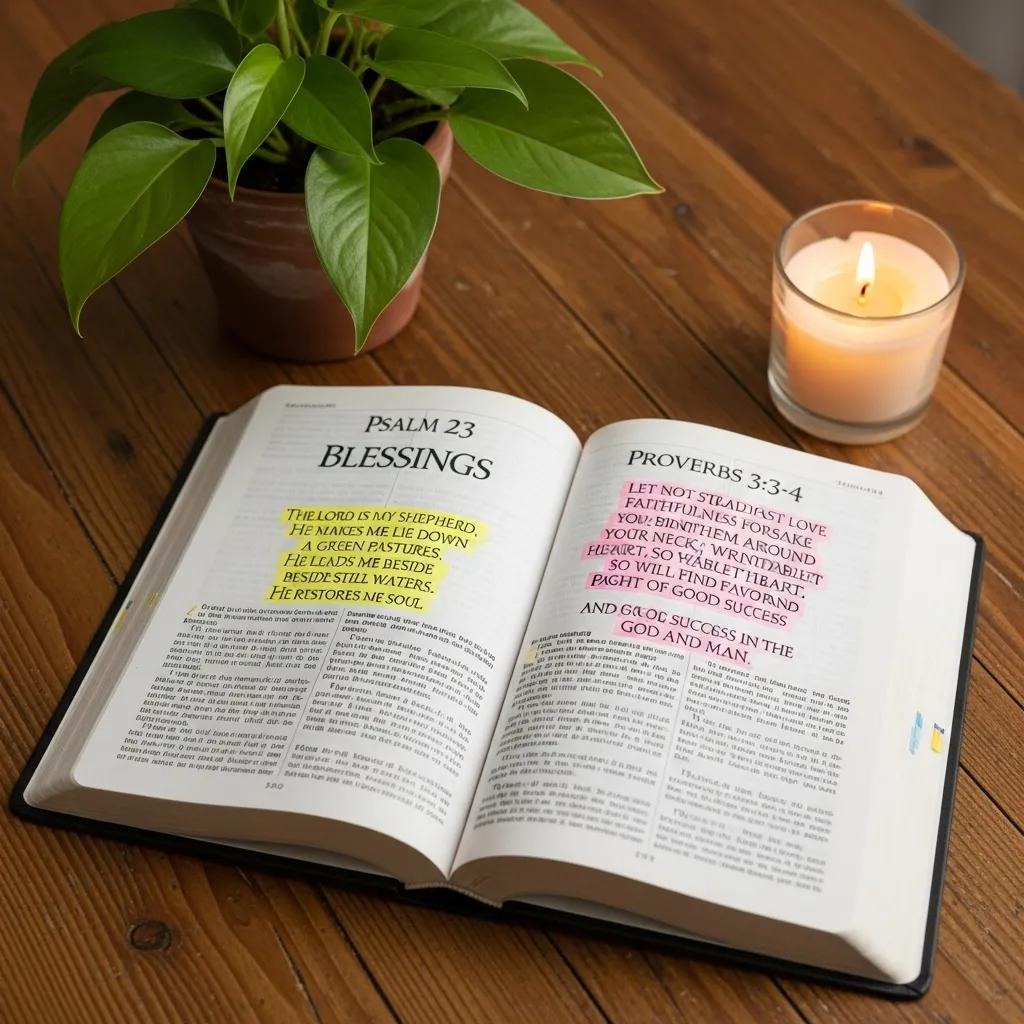
The Bible offers numerous passages that emphasize God’s active role in providing and blessing those who trust him, and these verses can be used as the backbone for prayers asking for favor. Key selections include Jeremiah 29:11, which affirms God’s plans for hope and a future; Proverbs 16:3, which links committing plans to the Lord with success; Philippians 4:19, which assures God’s provision; and Psalm 5:12, which speaks of God surrounding the righteous with favor. Each verse frames blessing as relational and purposeful, giving practical language for prayer and meditation.
To use these scriptures in prayer, read the verse slowly, reflect on how it applies to your situation, then speak a short prayer that echoes its promise—this creates a spiritual habit of aligning requests with scriptural truth and turning “luck” into trust in God’s active care.
How Can Christians Pray for Divine Favor and Blessings?
Praying for divine favor begins with a posture of humility, confession, and dependence, followed by clear requests that seek God’s will and wisdom rather than mere desire for outcomes. Effective prayers combine thanksgiving, simple petitions, and requests for guidance or open doors, acknowledging God’s sovereignty and asking to be used for his purposes. The steps below offer a practical framework to prepare and pray intentionally for favor in everyday life, and the sample prayers that follow give language you can adapt to specific contexts.
- Prepare the heart: Confess and turn from patterns that hinder relationship with God.
- Give thanks: Begin with gratitude for past provision and present blessings.
- Ask clearly: Request favor, wisdom, and open doors in specific terms.
- Surrender outcome: Declare willingness to accept God’s timing and outcome.
- Act faithfully: Pair prayer with stewardship, wise decisions, and obedience.
These steps make prayer a disciplined conversation rather than a hope for random good fortune, and they guide believers toward praying in ways that invite God’s purposeful involvement.
What Are Effective Prayers for Seeking God’s Favor in Daily Life?
Short, simple prayers are often the most practical for everyday life because they can be repeated and adapted when situations arise. Morning prayers that ask for guidance, brief prayers before decisions requesting wisdom, and short evening prayers of gratitude foster a continuous reliance on God rather than superstition. Below are several concise prayers categorized by context that you can use immediately, each designed to be easily personalized and repeated as part of daily rhythms.
- Morning: “Lord, meet me today with your favor and guide my steps so I act with wisdom and integrity.”
- Before decisions: “Father, grant me discernment and open the right doors if this aligns with your will.”
- For interviews or meetings: “God, give me clarity, favor with those I meet, and words that honor you.”
- For protection: “Lord, surround me with your favor and keep me from harm as I walk today.”
Using these brief prayers regularly trains the heart to seek divine favor with humility and dependence, and it naturally leads into longer prayers of discernment when needed.
How to Pray for Success and Prosperity According to Christian Faith?
Praying for success and prosperity in a Christian context emphasizes stewardship, wisdom, and the flourishing of others rather than selfish gain; success is defined by faithfulness and fruitfulness in God’s purposes. Effective prayers for prosperity therefore ask for provision, skillful work, and opportunities to steward resources well, while avoiding language that equates blessing only with material wealth. Include requests for wisdom in managing resources and for opportunities to bless others, aligning prosperity with kingdom priorities.
Sample prayers might ask, “Lord, provide the resources and wisdom to do my work excellently and to be generous,” and “Teach me to steward what you give so it multiplies for your kingdom.” These balanced prayers request both provision and character transformation, encouraging responsible use of blessing rather than entitlement.
What Bible Verses Are Best for Prayers About Prosperity and Blessings?
Scripture supplies focused passages that address provision, blessing, protection, and divine favor—verses that can be read, memorized, and prayed back to God when asking for blessing. Grouping these verses by theme helps readers select the right scriptural anchor for their prayers, whether they need provision, protection, or confirmation of God’s favor. The table below organizes selected verses by theme and suggests a practical way to pray each verse into your circumstances.
| Verse (Reference) | Theme / Promise | How to Use in Prayer |
|---|---|---|
| Jeremiah 29:11 | Hope and future | Pray for God’s plan and trust beyond current uncertainty |
| Philippians 4:19 | Provision | Ask God to supply needs as you pursue faithful work |
| Proverbs 16:3 | Success in plans | Commit your plans and request blessing over them |
| Psalm 5:12 | Favor and protection | Ask to be surrounded by God’s favor in daily tasks |
Which Scriptures Encourage Financial and Spiritual Abundance?
Verses that speak to both material provision and spiritual riches include Philippians 4:19 for provision, Matthew 6:33 on seeking God’s kingdom first, and 2 Corinthians 9:8 about sufficiency and generosity. These passages link provision with priorities—placing God first—so praying them together encourages both dependence on God’s provision and commitment to generous stewardship.
Praying these verses shifts the focus from accumulation to alignment: resources are sought so they can be stewarded fruitfully for God’s purposes, which reframes prosperity as an opportunity for service.
How Do Bible Verses Inspire Trust in God’s Provision?
Scripture builds trust by repeatedly showing God’s character as faithful, present, and just, which helps reduce anxiety over uncertain outcomes. Verses like Psalm 23 and Philippians 4:6–7 teach believers to exchange worry for prayer and to rely on God’s peace, which in turn supports a mindset that looks for God’s favor rather than relying on chance. Practically, memorize a promise, journal how God has provided in the past, and pray those memories back to God when anxiety arises.
These practices—meditation on promise, remembrance of provision, and petition—form a spiritual pattern that replaces reliance on luck with trust in a predictable, relational God.
How Can Christians Cultivate a Faith-Filled Mindset to Receive God’s Blessings?

Cultivating a mindset receptive to God’s blessings involves daily spiritual disciplines: prayer, Scripture reading, gratitude, confession, and service. These practices shape expectations and action, training the heart to notice and steward opportunities God provides rather than waiting for random good fortune. Habit pathways turn one-off prayers into sustained formation, and the next subsection offers concrete daily practices and a short example habit path that readers can adopt.
- Morning prayer and Scripture reading to start the day grounded in God’s promises.
- Midday brief breath prayers or scripture reminders to maintain perspective.
- Evening gratitude journaling to recall and thank God for daily provisions.
Consistently living these practices builds a rhythm where trust and obedience shape outcomes more than hoping for random luck.
What Daily Practices Support Trusting God Over Luck?
Practical daily rituals include a short morning prayer, a midday scripture reminder, and an evening reflection that lists three ways God showed favor that day; each practice is bite-sized so it is sustainable. Morning routines set intention, midday reminders recalibrate focus during busyness, and evening reflection trains memory to see God’s hand in ordinary events. Pair these with simple acts of obedience—small generosity, ethical choices at work, or reaching out to someone in need—to demonstrate faith in action.
Over time these rituals produce a feedback loop: noticing favor leads to gratitude, gratitude increases trust, and trust invites further faithful action, displacing a mentality dependent on luck.
How Does Overcoming Anxiety Through Faith Relate to Divine Favor?
Prayer transforms anxiety by redirecting attention from outcomes to relationship, allowing God’s peace to guard the heart and mind as promised in Scripture. Applying Philippians 4:6–7, practical steps include converting anxious thoughts into specific prayers, practicing breath prayers during stress, and sharing burdens with a faith community for mutual support. These steps reduce reactive fear and position believers to pursue opportunities with clarity, which invites wise decisions and often aligns circumstances where favor can be recognized.
Facing anxious moments with these habits strengthens spiritual resilience, enabling a posture of trust that looks for God’s guidance instead of relying on uncertain luck.
How Does the FaithTime App Support Prayer for Good Luck and Divine Favor?
FaithTime provides practical, app-based supports that help users turn the spiritual practices described above into consistent daily habits through brief, guided interactions. The app emphasizes short prayers, scripture reminders, daily devotion prompts, devotion tracking, and community prayer—features that align directly with the habit pathways recommended earlier. Used as a tool rather than a substitute for spiritual formation, the app helps users remember Scripture, track devotion progress, and participate in shared prayer rhythms that reinforce trust in God’s providence and favor.
| App Capability | Function | User Benefit / Example |
|---|---|---|
| Short prayers | Delivers concise prayer prompts | Helps users pray quickly in morning or before decisions |
| Scripture reminders | Sends brief verse reminders | Keeps promises of God front-of-mind during the day |
| Devotion tracking | Records daily devotion consistency | Encourages habit formation and reflection |
| Community prayer | Supports shared prayer interactions | Builds accountability and mutual encouragement |
How Does FaithTime Guide Daily Devotionals and Prayer for Blessings?
FaithTime guides daily devotions by offering short, focused prompts that can anchor a morning routine, a pre-decision prayer, or a nightly gratitude reflection; these are designed to be brief so they can fit into busy schedules. A sample daily path might be: morning scripture prompt + a short prayer for wisdom before work + midday verse reminder + evening reflection logged in the app to note moments of favor. This sequence models the habit path described earlier and helps users track progress, making spiritual disciplines easier to maintain over time.
The app’s structure supports incremental growth: small, repeatable actions become a reliable spiritual rhythm that positions users to recognize and steward God’s favor rather than attributing outcomes to chance.
What Community Features Help Strengthen Faith and Shared Prayer?
Community features in a devotional context provide opportunities for shared prayer, encouragement, and accountability without replacing personal devotion; being part of a faith community helps sustain habits and provides practical support during anxious seasons. Examples include joining a group prayer rhythm, sharing brief prayer requests, and celebrating answered prayers together—practices that multiply trust and reinforce biblical expectations about God’s care. These interactions foster a culture of mutual support that complements personal disciplines and helps believers remain oriented toward God’s providence.
Community accountability and shared testimony make it easier to see patterns of favor over time, shifting the narrative from random luck to faithful evidence of God’s active work.
What Are Common Questions About Prayer for Good Luck and God’s Blessings?
Many people ask whether Christians should speak of luck at all, which scriptures to use when praying for favor, and what Psalms are helpful for protection and blessing; answering these succinctly helps clarify confusion and offers practical next steps. The brief Q&A below addresses several common queries with short, scripture-backed responses and pointers for application. After these answers, a final practical note points readers toward tools that support implementing daily practices described throughout the article.
- Should Christians believe in luck or trust God’s providence?: Trust God’s providence; Scripture calls believers to seek God’s will and rely on his sovereign care rather than chance.
- How should I pray when I want favor?: Pray with humility, thanksgiving, clear requests, and surrender of outcomes, using Scripture to shape petitions.
- Which Psalm is good for prayers about good fortune?: Psalm 23 and Psalm 121 are both helpful for comfort, protection, and recalling God’s active care.
Should Christians Believe in Luck or Trust God’s Providence?
Christians are called to trust God’s providence rather than accept luck as a guiding principle; Scripture consistently invites reliance on God’s wisdom, timing, and care. Practically, this means praying for guidance and favor while taking responsible action—planning, working diligently, and stewarding resources—so faith and effort work together. Replace language of “luck” with phrases like “pray for God’s favor” or “ask for God’s guidance,” which better reflect the biblical posture of dependence and expectation that God actively participates in human lives.
This rephrasing reshapes both internal expectations and external behavior, aligning prayer with biblical trust and practical stewardship.
What Psalm Is Recommended for Prayers About Good Fortune?
Psalm 23 offers assurance of God’s leading and provision and can be prayed for guidance and blessing, while Psalm 121 emphasizes God’s protection over journeys and daily work. When using these Psalms, read them slowly, meditate on a single verse, and then pray a short adaptation that makes the promise personal—this practice deepens trust and turns scripture into a living conversation. Framing these Psalms as tools for trust rather than magical formulas helps maintain a healthy theology of blessing.
For practical application, choose one verse to memorize each week and use it as the anchor for short daily prayers; this habit builds confidence in God’s faithful provision over time.
For ongoing support in turning these practices into daily habits—short prayers, scripture reminders, and simple devotion tracking—FaithTime.ai offers tools designed to help users sustain the routines described above. The app’s resources complement the habits recommended throughout this article and provide gentle prompts to keep prayer and Scripture at the center of daily life.
When you are stepping into exams, interviews, or new opportunities, the FaithTime app can help you turn “good luck” moments into Scripture-shaped prayers for guidance, favor, and courage. For an easy way to keep these tools with you, you can download FaithTime app and use its prompts and reminders whenever you want to ask for God’s favor instead of relying on luck. For ongoing encouragement, you can explore our prayer collection and topical Bible verse library to find passages about blessing, provision, and God’s plans for your future. You may also find it helpful to pray through a new month blessing or a morning prayer if you are asking God for success, open doors, and integrity in your work or business.