
The Orthodox Bible contains more books than most Protestant editions, and the exact count varies by tradition—generally ranging from about 75 to 81 books across different Orthodox churches. This article explains why those numbers differ, showing which books the Eastern Orthodox and Ethiopian Orthodox traditions include, how the New Testament remains consistent, and how the Septuagint shapes Orthodox Old Testament choices. Readers will learn a full Eastern Orthodox books list, quick comparison tables comparing Orthodox, Catholic, and Protestant canons, and practical guidance for devotional Bible study amidst canonical variety. Many people asking “how many books are in the orthodox bible” want both a numeric answer and a readable map of where specific books sit in each tradition; this guide provides both a concise overview and detailed, tradition-by-tradition notes. For daily engagement with these texts, FaithTime devotional app offers tools to keep readings manageable—its daily devotion tracking, supportive prayer community, and Ask Bible Chat feature can help users digest extended or unfamiliar books and clarify canonical questions.
What Is the Orthodox Bible and How Many Books Does It Contain?
The Orthodox Bible is the Christian Scripture recognized by Eastern Orthodox churches, and its total book count typically falls in a range (commonly cited as 75–81) because different autocephalous churches accept slightly different Old Testament collections. The reason counts vary is primarily historical: Orthodox traditions rely on the Septuagint (a Greek Old Testament translation) and long-standing liturgical usage, which preserved additional books not present in the Hebrew Masoretic Text. The New Testament remains stable at 27 books across Orthodox, Catholic, and Protestant communions, so differences are concentrated in the Old Testament list. Understanding the criteria that shaped the Orthodox canon—liturgical use, patristic citation, and Septuagint authority—helps explain why certain deuterocanonical books are standard in Orthodox Bibles.
What Defines the Orthodox Bible Canon?
The Orthodox canon is defined through a mix of historical usage, liturgical practice, and patristic endorsement rather than a single defining council, and this combination explains why some books have enduring recognition. Early church communities used the Septuagint widely, and books that featured in worship and were cited by Church Fathers gained authoritative status over time. Councils and regional synods confirmed local practice, but no single ecumenical synod universally finalized every book for all Orthodox jurisdictions, allowing some variation. Books that were debated historically—such as 3 Maccabees or the Prayer of Manasseh—earned acceptance in some communities because of their liturgical or theological usefulness, which preserved them in those local Bibles.
How Does the New Testament Compare Across Christian Bibles?
The New Testament list of 27 books is essentially identical across Orthodox, Catholic, and Protestant Bibles, which provides a strong center of consensus for Christian doctrine and teaching. Differences among traditions appear primarily at the manuscript and textual-variant level, not in which New Testament books are canonical; textual criticism addresses variant readings rather than canonical inclusion. This stability means that debates about canonical counts—such as “how many books are in the orthodox bible”—stem from Old Testament distinctions. Because the New Testament canon is shared, comparative study tends to focus on how the Old Testament framework shapes theology and liturgical practice in each tradition.
What Are the Books Included in the Eastern Orthodox Bible? Full Canon List Explained
This section lists books commonly found in Eastern Orthodox Old Testaments and notes which traditions include them, helping readers assemble an eastern orthodox bible books list for study and devotion. The Orthodox Old Testament builds on the Septuagint, so it includes many books known as deuterocanonical or apocryphal in other traditions—such as Tobit, Wisdom of Solomon, Sirach, and extra Psalms—while some jurisdictions add further texts like 3–4 Maccabees or Psalm 151.
Below is a quick reference table showing representative canonical status across major traditions to aid quick comparison and to anchor further reading.
| Book Title | Canonical Status (Greek Orthodox) | Canonical Status (Russian Orthodox) | Canonical Status (Ethiopian Orthodox) | Catholic | Protestant |
|---|---|---|---|---|---|
| Tobit | Included | Included | Included | Included | Excluded (Apocrypha) |
| Sirach (Ecclesiasticus) | Included | Included | Included | Included | Excluded (Apocrypha) |
| 1 Enoch | Not included | Not included | Included | Not included | Not included |
This table highlights common overlaps and a notable Ethiopian exception; readers can use it as a starting point for deeper comparison. The presence of books like Tobit and Sirach across Greek and Russian usage illustrates the Septuagint’s influence, while the Ethiopian Orthodox canon expands further with texts such as Enoch and Jubilees, reflecting ancient regional canons that the Ethiopian Church preserved.
Which Books Are Common Across All Orthodox Traditions?
Most Orthodox traditions share a core Old Testament that corresponds closely with the Septuagint subset of books widely used by the early church, and these overlap substantially with the Catholic deuterocanonical list. Core shared books include Tobit, Judith, Wisdom of Solomon, Sirach, Baruch, and the Maccabees recognized in Greek practice; Psalter additions like Psalm 151 appear in some Orthodox liturgical contexts. This overlap means that many of the deuterocanonical books familiar to Catholic readers are also used liturgically and devotionally in Orthodox churches. Because these books are woven into liturgy and patristic citation, they have been retained as formative Scripture in those communities.
What Unique Books Are Found in Specific Orthodox Traditions?
Some Orthodox bodies include books that are unique or more common in particular national traditions: for example, Greek and Russian churches may retain 3 Maccabees, 4 Maccabees (often as appendix or liturgical reading), Psalm 151, and the Prayer of Manasseh in certain editions, while the Ethiopian Orthodox Tewahedo Church preserves a far larger Old Testament corpus that includes 1–3 Meqabyan, Enoch, and Jubilees. These unique books reflect regional history and the transmission of local liturgical texts through centuries. The significance of these particular books ranges from historical narrative (Meqabyan collections) to visionary cosmology (Enoch and Jubilees), and their inclusion enriches the diversity of Orthodox scriptural heritage.
How Does the Orthodox Bible Differ from the Catholic and Protestant Bibles?
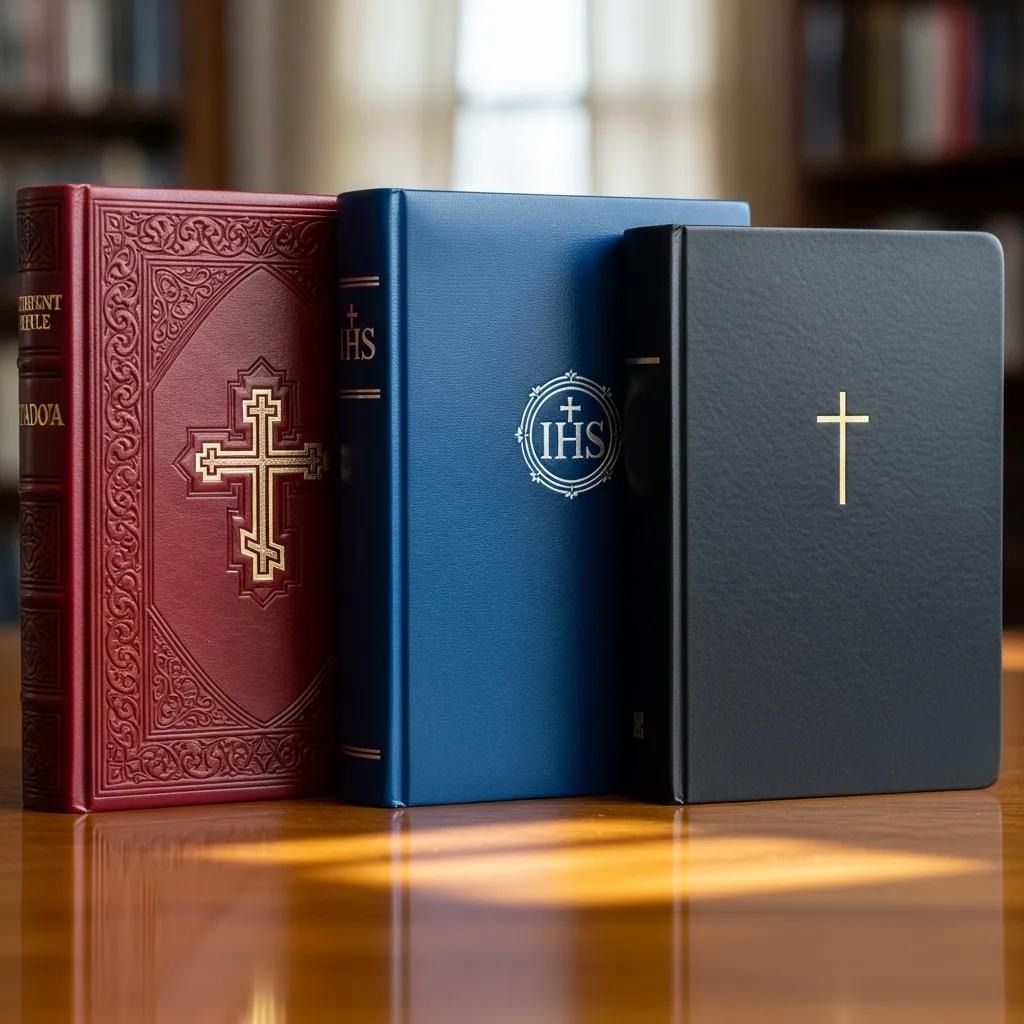
At a glance, the canonical counts differ: Orthodox traditions typically present a larger Old Testament total (commonly 75–81), the Catholic Bible contains 73 books, and most Protestant Bibles have 66 books. These numeric differences arise from source-text preference and Reformation-era decisions: Orthodox churches lean on the Septuagint, Catholics formalized their canon in the late ancient and medieval period, and Protestants aligned with the Hebrew Masoretic Text and excluded several deuterocanonical books in the Reformation.
The table below summarizes these counts and key distinguishing features for quick comparison.
| Tradition | Typical Total Book Count | Old Testament Basis / Notable Unique Books |
|---|---|---|
| Eastern Orthodox (varies by church) | ~75–81 | Septuagint-based; includes Maccabees variants, Psalm 151, Prayer of Manasseh |
| Catholic | 73 | Latin Vulgate tradition; includes Tobit, Judith, Maccabees, Baruch |
| Protestant | 66 | Masoretic Text basis; deuterocanonical books treated as Apocrypha or excluded |
This comparison clarifies that differences are not arbitrary but rooted in differing textual traditions and historical decisions; Orthodox reliance on the Septuagint explains the broader Old Testament list, Catholic acceptance aligns with Vulgate practice, and Protestant exclusion stems from Reformation criteria favoring Hebrew canon alignment.
What Are the Key Differences Between Orthodox and Catholic Bible Canons?
Orthodox and Catholic canons share many deuterocanonical books, but Orthodox collections sometimes retain additional texts and Psalter additions due to Septuagint precedence and liturgical tradition. Both traditions accept books such as Tobit, Sirach, and Wisdom, while Orthodox practice sometimes includes 3–4 Maccabees or Psalm 151 in liturgical editions where Catholic canon does not. Historically, the differences reflect regional usage patterns and translation bases rather than radical doctrinal divergence; both traditions value patristic authority and liturgical precedent, but the Orthodox emphasize the Septuagint as scripture in worship and theology. Understanding this nuance clarifies why the lists overlap but are not identical.
Why Does the Protestant Bible Have Fewer Books Than the Orthodox Bible?
Protestant Bibles typically have fewer books because Reformers prioritized the Hebrew Masoretic Text as the Old Testament standard and questioned the canonicity of texts not present in that Hebrew corpus. During the Reformation, leaders distinguished canonical Scripture from Apocrypha, placing certain books in secondary status or excluding them from the canon used for doctrine. This resulted in a 66-book Protestant canon (27 New Testament + 39 Old Testament books from the Hebrew order) and led to the common Protestant practice of relegating deuterocanonical books to an appendix or omitting them entirely. The methodological shift—textual basis and theological criteria—accounts for the shorter Protestant book list.
What Is the Role of the Septuagint in the Orthodox Old Testament Canon?
The Septuagint is a Koine Greek translation of Hebrew Scriptures produced between the 3rd and 1st centuries BCE, and it serves as the historical Old Testament foundation for the Orthodox Church because early Christianity used the Greek Scriptures extensively. The Septuagint often contained books or expansions absent from the later Masoretic Text and shaped the scriptural readings of the early Church Fathers and liturgical practice. Because many patristic citations and New Testament authors quote the Septuagint, Orthodox tradition treats it as a primary textual witness and theological resource, which in turn explains inclusion of extra books and liturgical psalm additions in Orthodox Bibles.
How Did the Septuagint Influence the Orthodox Bible’s Book Selection?
The Septuagint’s contents directly influenced Orthodox book selection by providing a corpus of Greek Scriptures that early Christians read, quoted, and used in worship, and those books that were integrated into public liturgy became de facto canonical over time. Patristic authors and lectionaries often cite Septuagint readings, reinforcing the authority of books like Wisdom, Sirach, and certain Maccabean works. The result is a tradition that recognizes texts found in the Septuagint as scripturally valuable, especially when they contributed to theological reflection or liturgical practice. Liturgical habit and patristic endorsement thus combined to make Septuagint books central to Orthodox canon formation.
Why Is the Septuagint Still Important for Orthodox Christians Today?

The Septuagint remains vital for Orthodox worship, theology, and private devotion because it underpins liturgical readings, hymnography, and many patristic interpretations still authoritative in the Church. Clergy and laity encounter Septuagint texts in daily offices, feast-day readings, and hymn-texts, which keeps those books integrated into lived ecclesial piety. Practically, studying the Septuagint can deepen understanding of how the early Church read Scripture and reveal variant readings that illuminate doctrinal formation. For someone exploring an eastern orthodox bible books list, engaging with the Septuagint provides direct access to the textual tradition that shaped Orthodox Scripture and practice.
How Can Orthodox Christians Approach Bible Study Amid Canonical Differences?
Studying Scripture when canons vary calls for practical strategies that respect tradition while fostering informed devotion; a few clear steps help readers navigate differences without confusion. First, focus on one tradition’s lectionary or canonical edition during a study cycle to maintain coherence and liturgical relevance. Second, use comparative tables and trusted secondary resources to map differences where questions arise, allowing informed curiosity without capricious switching. Third, integrate liturgical readings with personal study to see how texts function in prayer and doctrine. These study habits yield disciplined reading while opening space for ecumenical learning.
- Follow a single tradition’s lectionary for a study season to ensure consistent liturgical context and devotional focus.
- Use comparative tables and lists to track which books differ among traditions and why those differences matter historically.
- Consult patristic citations and liturgical usage to understand how a book was used in worship and theology.
- Practice charitable inquiry when comparing canons, prioritizing unity in essentials and learning in secondary matters.
What Tools Does the FaithTime App Offer for Understanding the Orthodox Bible?
FaithTime helps users translate scholarly canon discussions into daily practice by offering daily devotion tracking, reading plans tailored to different canons, and a supportive prayer community for shared reflection; you can explore FaithTime features to find a rhythm of reading and prayer that fits your tradition and pace. The app’s Ask Bible Chat feature allows users to pose canonical questions and receive authoritative, intelligible guidance, which can clarify why certain books appear in specific Orthodox traditions. By combining short daily readings with a community that encourages questions and prayerful study, FaithTime makes it practical to engage extended or unfamiliar canonical texts without feeling overwhelmed. Users can adopt a focused reading plan—such as following a Septuagint-informed lectionary or sampling deuterocanonical books over a month—to experience these texts within a devotionally grounded rhythm.
How Can Clarifying Canonical Differences Enrich Daily Devotion?
Learning about canonical differences can deepen prayer and liturgy by exposing readers to texts that shaped early Christian worship and theological imagination, giving fresh material for reflection and hymnography. For example, encountering a deuterocanonical psalm used in Orthodox liturgy can widen one’s prayer vocabulary and illuminate themes echoed in New Testament writings. Integrating such texts into regular reading cycles can enrich devotional imagination and foster appreciation for the Church’s historical breadth. Ultimately, clarifying canon status invites devotional curiosity that strengthens both personal prayer life and communal worship, encouraging readers to treasure a wider scriptural heritage.
Why Do Differences in Biblical Canons Matter for Faith and Practice?
Canonical differences matter because they reflect divergent historical decisions about scripture’s shape, which in turn influence liturgy, devotional emphasis, and theological reflection across Christian traditions. The books a community reads regularly shape its piety—books included in lectionaries inform preaching, hymnography, and sacramental theology—so canonical variation produces real differences in spiritual formation. Acknowledging this reality helps explain why ecumenical conversations often address not only doctrinal points but also the texts communities hold as authoritative. Constructive dialogue can therefore focus on shared essentials while honoring canonical distinctives.
- Doctrinal emphasis: Canonical choices influence theological vocabulary and scriptural precedent used in doctrine and teaching.
- Liturgical practice: Books used in worship shape hymnography, lectionary cycles, and sacramental texts that form congregational life.
- Ecumenical conversation: Recognizing textual differences creates opportunities for respectful study and mutual enrichment rather than division.
How Do Canonical Differences Reflect Church Tradition and History?
Canonical differences echo historical patterns of regional usage, translation preference, and council or synodal affirmation, and they illustrate how local liturgical and theological needs shaped Scripture’s reception. Examples include the widespread use of the Septuagint in Greek-speaking churches, which led to broader Old Testament collections, and the preservation of additional texts in the Ethiopian Church reflecting ancient Jewish-Christian literature still valued there. These historical touchpoints reveal that canon formation was organic, emerging from worship, citation, and theological utility rather than a single moment of decree. Appreciating this historical texture helps readers see canon as a living tradition shaped by centuries of practice.
What Impact Do These Differences Have on Christian Unity and Dialogue?
While differing canons can present obstacles for doctrinal tidiness, they also offer fertile ground for dialogue: communities can recognize shared core Scriptures while exploring secondary books as windows into each tradition’s spiritual heritage. Practical pathways for respectful engagement include joint reading projects of mutually accepted texts, exchange of liturgical resources to experience different lectionary patterns, and scholarly cooperation to compare textual witnesses. Such practices promote unity grounded in shared essentials while allowing diversity in secondary matters, fostering humility and curiosity rather than polemic. By focusing on common confession and shared practices, churches can use canonical differences as opportunities for mutual enrichment.
- Start with shared Scripture and common lectionary excerpts to build mutual spiritual understanding.
- Organize joint study groups that compare a single book from different canons and reflect on its liturgical and theological role.
- Encourage respectful exchange of liturgical texts so communities can experience how different canons shape prayer and teaching.
For readers who want gentle, everyday support as they keep studying questions about Orthodox, Catholic, and Protestant Bibles, you can learn more about the devotional tools, canon‑aware reading plans, and community features available through FaithTime, which are designed to help you grow steadily in Scripture and prayer.
If you would like more structured teaching on topics like canon formation, deuterocanonical books, and how to read difficult passages wisely, you can explore FaithTime’s Bible lessons, and for quick explanations of terms such as canon, deuterocanonical, Septuagint, or lectionary, you can visit the Christian glossary.
For practical next steps, you can also study FaithTime’s Bible lesson on the chapters in Revelation, and use the guide to the best order to read the Bible to plan a reading path that keeps Jesus and the main storyline central while you navigate different canons.