

Nazareth, known as the hometown of Jesus Christ, holds profound significance in Christian faith and history. This article delves into the geographical, historical, and biblical context of Nazareth, exploring its role as a pivotal location in the life of Jesus and its importance in the New Testament. If you’d like a simple devotional app to help you reflect on places like Nazareth through daily Scripture and prayer, FaithTime can gently support your time with God. Readers will gain insights into the key events that unfolded in this ancient town, the archaeological discoveries that support its biblical narrative, and why it remains a major pilgrimage site for Christians today. By understanding Nazareth’s rich heritage, one can appreciate its spiritual significance and the impact it has on faith journeys. We will also explore how Faith app can enhance your exploration of Nazareth’s spiritual dimensions.
Where is Nazareth Located and What Is Its Historical Context?
Nazareth is situated in the northern region of Israel, specifically in the Galilee area. This town is characterized by its hilly terrain and is surrounded by lush landscapes, making it a picturesque location. The climate is Mediterranean, with hot, dry summers and mild, wet winters, which has influenced the agricultural practices of the region. Historically, Nazareth was a small village during the time of Jesus, and its location played a crucial role in the socio-political dynamics of the Roman Empire.
What Is the Geographical Setting of Nazareth in Israel?
The geographical setting of Nazareth is defined by its elevation and proximity to significant landmarks. Nestled in the hills, it overlooks the Jezreel Valley and is near the Sea of Galilee. The topography includes rocky hills and fertile valleys, which have historically supported agriculture. The climate, with its warm summers and mild winters, has made it conducive for farming, contributing to the livelihood of its inhabitants.
How Did Ancient Nazareth Fit into the Roman Empire?
During the Roman Empire, Nazareth was a part of the larger province of Galilee, which was known for its diverse population and cultural exchanges. The Roman governance introduced various cultural influences, including Hellenistic practices, which shaped the daily lives of the residents. Trade routes passing through Galilee facilitated economic interactions, making Nazareth a point of convergence for different cultures and ideas. However, Nazareth itself was a small and relatively insignificant village at the time, not a major center of trade or politics.
What Does the Bible Say About Nazareth? Key Events and Prophecies

Nazareth is frequently mentioned in the New Testament, highlighting its significance in the life of Jesus. The town is not only the place where Jesus grew up but also the setting for several key biblical events, including the Annunciation, where the Angel Gabriel announced to Mary that she would conceive Jesus.
Where Is Nazareth Mentioned in the New Testament?
Nazareth is referenced multiple times in the New Testament, particularly in the Gospels. Key verses include Matthew 2:23, which states that Jesus would be called a Nazarene, and Luke 1:26-38, which details the Annunciation. These mentions underscore the town’s importance in the narrative of Jesus‘ life and mission. It is worth noting that the prophecy in Matthew 2:23 about Jesus being called a Nazarene is not found in the Old Testament but is understood as a wordplay or a reference to his association with Nazareth.
What Is the Significance of the Annunciation in Nazareth?
The Annunciation is a pivotal event in Christian theology, marking the moment when Mary was informed by the Angel Gabriel about her role as the mother of Jesus. This event signifies the divine intervention in human history and highlights Mary’s faith and obedience. The theological implications of the Annunciation extend beyond Nazareth, influencing Christian beliefs about the incarnation and the nature of Jesus.
Who Were the Key Biblical Figures Associated with Nazareth?
Several key biblical ps are associated with Nazareth, most notably Jesus Christ, Mary, and Joseph. Their lives and experiences in this town provide a deeper understanding of its significance in the biblical narrative.
What Was Jesus Christ’s Early Life Like in Nazareth?
Jesus‘ early life in Nazareth was marked by his upbringing in a humble environment. He lived with Mary and Joseph, who were devout Jews, and was raised in the traditions of his faith. The experiences and teachings he encountered during his formative years in Nazareth shaped his later ministry and teachings.
How Did Mary and Joseph’s Lives Connect to Nazareth?
Mary and Joseph’s connection to Nazareth is foundational to the Christian story. Mary, a young woman from Nazareth, was chosen to bear the Son of God, while Joseph, her betrothed, played a crucial role in protecting and raising Jesus. Their lives in Nazareth reflect themes of faith, obedience, and divine purpose, which resonate throughout the New Testament.
What Archaeological Discoveries Support Nazareth’s Biblical History?
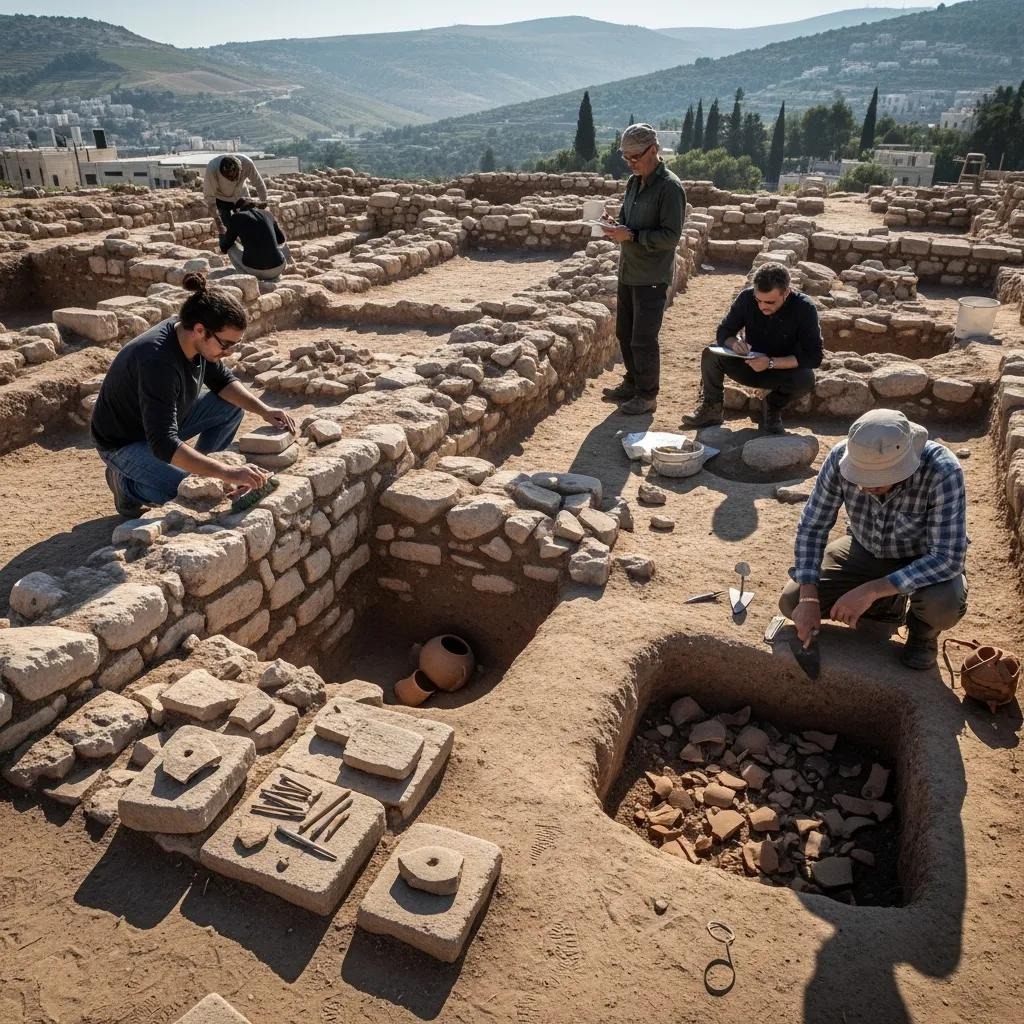
Archaeological findings in Nazareth have provided valuable insights into its historical context and biblical significance. Excavations have revealed structures and artifacts that corroborate the existence of a Jewish community during the time of Jesus.
Scholarly investigations further illuminate early first-century Nazareth, revealing archaeological evidence that also points to its later significance as a pilgrimage center.
What Have Excavations Revealed About Ancient Nazareth?
Excavations in Nazareth have uncovered remnants of ancient dwellings, pottery, and tools that date back to the first century. These findings indicate that Nazareth was a small but vibrant community, supporting the biblical accounts of Jesus‘ upbringing. The discovery of a first-century house, believed to be a typical dwelling of the time, offers a glimpse into the daily lives of its inhabitants.
Detailed studies of the site continue to uncover specific first-century archaeological remains, offering a clearer picture of daily life.
How Do Archaeological Findings Corroborate Biblical Accounts?
The archaeological evidence from Nazareth aligns with biblical narratives, reinforcing the historical accuracy of the accounts found in the Gospels. For instance, the discovery of ritual baths (mikva’ot) and agricultural tools supports the depiction of Nazareth as a Jewish settlement engaged in traditional practices. These findings enhance our understanding of the socio-cultural environment in which Jesus lived and ministered.
These findings collectively provide compelling archaeological proof that supports the historical accuracy of biblical Nazareth.
Why Is Nazareth a Major Christian Pilgrimage Site Today?
Today, Nazareth is a significant pilgrimage site for Christians around the world. Its rich biblical history and spiritual significance attract thousands of visitors each year, seeking to connect with the roots of their faith.
What Are the Key Pilgrimage Sites in Modern Nazareth?
Modern Nazareth is home to several key pilgrimage sites, including the Basilica of the Annunciation, which commemorates the Annunciation event. Other notable sites include Nazareth Village, a living museum that recreates the life of first-century Nazareth, and the Basilica of Jesus the Adolescent, which highlights Jesus‘ youth. These sites provide pilgrims with opportunities for reflection and spiritual growth. If you want to keep that sense of pilgrimage alive in daily life, you can explore FaithTime features like Bible reading trackers, devotional plans, and prayer journaling tools that help you stay rooted in Jesus’ story wherever you are.
How Can Pilgrimage to Nazareth Deepen Your Faith Journey?
Pilgrimage to Nazareth offers a unique opportunity for spiritual renewal and connection to the Christian faith. Visitors often report profound experiences as they walk in the footsteps of Jesus and reflect on the events that shaped his life. Engaging with the historical and spiritual significance of Nazareth can deepen one’s understanding of the Christian narrative and foster a stronger faith.
How Can FaithTime.ai Help You Explore Nazareth’s Spiritual Significance?
Faithtime.ai is a daily devotional app designed to help users grow their faith through simple daily goals such as short prayers or Bible verses. The devotional app offers resources that can enhance your exploration of Nazareth’s spiritual significance.
How Does FaithTime’s AI Bible Chat Enhance Understanding of Nazareth?
FaithTime’s AI Bible Chat feature allows users to ask questions about biblical locations, including Nazareth. This interactive learning tool provides insights into the historical and spiritual context of Nazareth, helping users deepen their understanding of its significance in the Christian faith.
What Devotional Resources Does FaithTime Offer Related to Nazareth?
FaithTime offers a variety of devotional resources related to Nazareth, including daily devotionals that focus on key events and ps associated with the town. Users can access Bible verses that highlight the importance of Nazareth in the life of Jesus, along with prayer guides that encourage reflection on its spiritual significance.
For any further inquiries or support regarding your faith journey, you can always reach out through the Faithtime.ai contact page.
Frequently Asked Questions
What is the historical significance of Nazareth in early Christianity?
Nazareth holds a crucial place in early Christianity as the hometown of Jesus Christ. It is where significant events, such as the Annunciation, took place, marking the beginning of the Christian narrative. The town’s humble origins and its role in Jesus‘ upbringing provide context for understanding his teachings and ministry. Additionally, Nazareth’s mention in the New Testament emphasizes its importance in fulfilling biblical prophecies, making it a focal point for Christian faith and pilgrimage.
How has Nazareth changed over the centuries?
Over the centuries, Nazareth has transformed from a small village into a bustling city. Initially, it was a modest settlement during the time of Jesus, primarily inhabited by a Jewish community. With the rise of Christianity, Nazareth became a pilgrimage destination, leading to the construction of significant religious sites, such as the Basilica of the Annunciation. Today, it blends historical significance with modern development, attracting visitors from around the world while preserving its rich heritage.
What role do archaeological findings play in understanding Nazareth?
Archaeological findings in Nazareth are vital for understanding its historical and biblical context. Excavations have uncovered artifacts, structures, and remnants of daily life that corroborate biblical accounts of Jesus‘ upbringing. These discoveries provide insights into the socio-cultural environment of first-century Nazareth, enhancing our understanding of the community’s practices and beliefs. They also help validate the historical accuracy of the New Testament narratives, making archaeology an essential tool for biblical scholarship.
What are the main attractions for pilgrims visiting Nazareth today?
Modern pilgrims visiting Nazareth can explore several key attractions that highlight its biblical significance. The Basilica of the Annunciation is the most prominent site, commemorating the moment Mary was told she would bear Jesus. Other attractions include Nazareth Village, which recreates first-century life, and the Basilica of Jesus the Adolescent, focusing on Jesus‘ youth. These sites offer spiritual reflection and a deeper connection to the Christian faith, making Nazareth a meaningful destination for pilgrims.
How can visitors prepare for a pilgrimage to Nazareth?
Visitors planning a pilgrimage to Nazareth should consider several preparations to enhance their experience. Researching the historical and biblical significance of the sites can provide context for their visit. It’s also beneficial to plan an itinerary that includes key attractions and time for reflection. Engaging with local guides or joining organized tours can enrich the experience. Additionally, visitors may want to participate in prayer or devotional activities to deepen their spiritual journey while in Nazareth.
What is the significance of the Basilica of the Annunciation?
The Basilica of the Annunciation is one of the most important Christian sites in Nazareth, marking the location where the Angel Gabriel announced to Mary that she would conceive Jesus. This event is central to Christian theology, symbolizing divine intervention in human history. The basilica itself is an architectural marvel, attracting thousands of pilgrims and tourists each year. Its significance extends beyond its physical presence, serving as a place of worship, reflection, and connection to the foundational events of Christianity.
As you reflect on Nazareth as Jesus’ humble hometown and a living place of pilgrimage today, using a dedicated faith app can help you turn what you’ve learned into daily prayer, Scripture reading, and consistent spiritual habits. To keep exploring how locations like Nazareth fit into the wider story of Scripture, you can dive into our Christ-focused Bible lessons and curated Bible verses that highlight key passages about Jesus’ life and ministry. If you want to go further with related topics, you may also appreciate a focused study on Mary’s age in her Nazareth context and a practical overview of the twelve commandments, which together show how Jesus of Nazareth and His teachings still shape a life of obedience and worship today.