

Many readers ask whether Goliath was one of the Nephilim, since the Bible uses several terms—Nephilim, Anakim, Rephaim—to describe giants across different eras and texts. This article weighs the scriptural evidence, compares Hebrew terms and manuscript variants, and explains why careful exegesis matters for faith and study. You will find a clear profile of Goliath, a concise definition of the Nephilim in Genesis 6, an examination of Anakim and Rephaim, and an evaluation of theories about giants after the Flood. The goal is not to force a sensational conclusion but to guide readers through the primary sources, common interpretive traditions, and scholarly caution so you can form a thoughtful view. Along the way we provide practical study aids and suggest how to continue the conversation using FaithTime’s study tools and Ask Bible Chat for follow-up questions about the textual evidence.
Who Was Goliath? Biblical Description and Origins
Goliath appears in the biblical narrative as a Philistine champion from Gath, described as a large warrior who challenged Israel in the time of Saul and David. The account in 1 Samuel emphasizes his martial gear, his role in the Philistine army, and his contest with David, which frames theological themes about God’s deliverance through an unlikely hero. Understanding Goliath requires attending to manuscript details, Hebrew measurements, and the cultural context of Philistine society in the hill-country of ancient Canaan. The following subsections examine his reported height, heritage, and how later texts reference him or his kin, helping readers see why some identify him with other giant categories.
What Does the Bible Say About Goliath’s Height and Heritage?
The primary description of Goliath’s stature and weapons comes from 1 Samuel 17, which lists multiple measures and military details that signal extraordinary size and strength. The Hebrew text mentions a large stature often rendered as “six cubits and a span” in some traditions, though other textual witnesses preserve a shorter reading of “four cubits and a span”; these manuscript differences affect modern conversions into feet and meters. Translators and scholars typically convert a cubit to roughly 18–20 inches, so readings vary and scholars caution against treating the numbers as precise anatomical data. Attention to textual variants and the narrative’s rhetorical purpose helps readers weigh how literal the height claim should be interpreted without undermining the story’s theological intent.
The textual history of the David and Goliath narrative reveals significant variations that impact our understanding of the story’s details.
How Is Goliath Connected to the Anakim Giants of Gath?
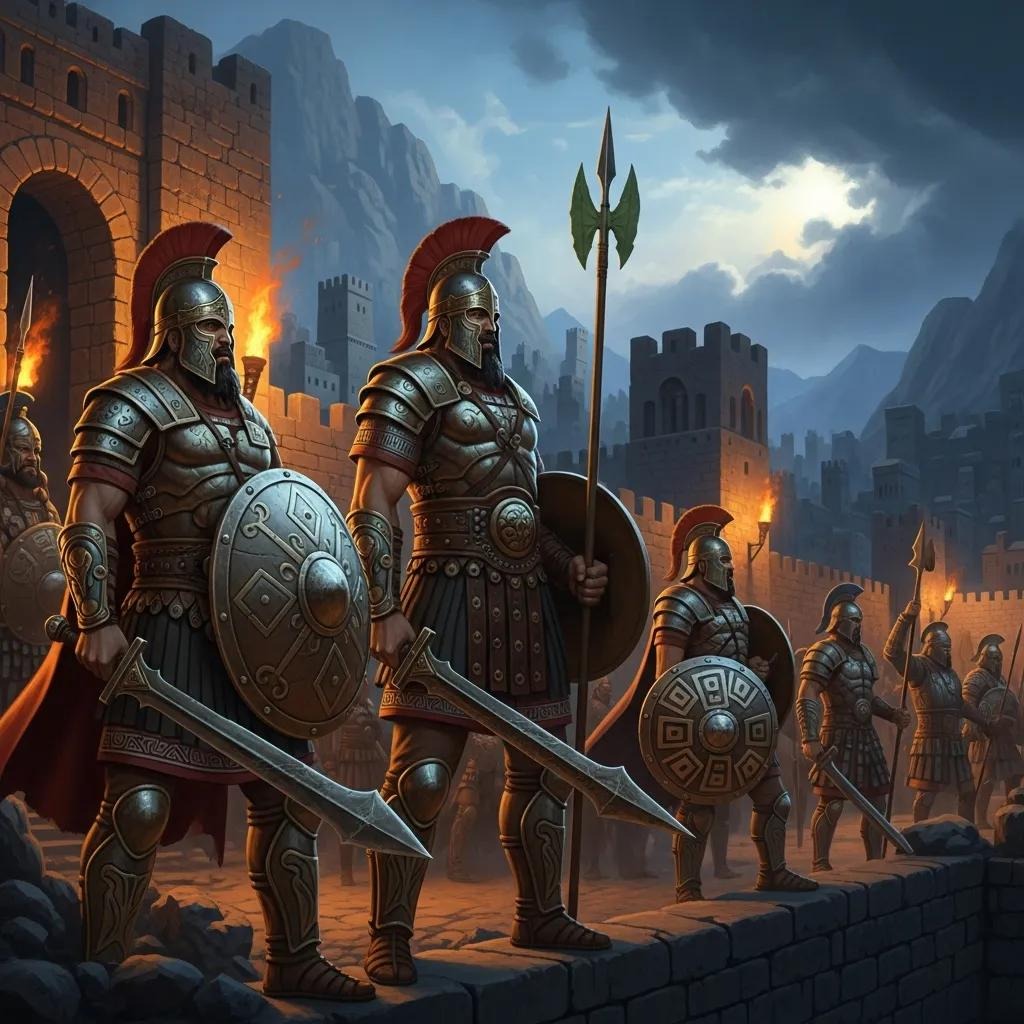
Goliath’s association with Gath and the Philistines places him in a geographic and cultural setting where other large ps—called Anakim in earlier traditions—are said to have lived, prompting some to infer a lineage or cultural memory linking him to Anakim. Numbers and Joshua report Anakim in southern Canaan and associate them with fortified cities that Israel feared when scouts surveyed the land, creating a backdrop for later references to large inhabitants. While the text never explicitly calls Goliath an Anakim in 1 Samuel, his origin in Gath alongside references to other large Philistine ps invites comparison and careful inference, which is why many commentators see a plausible Anakim connection without asserting it as definitive.
Different strands of textual evidence and geographic overlap thus make a family or tribal link plausible, while the narrative framing in Samuel emphasizes Goliath’s role as a foil to Israel’s faith rather than as an ethnographic report.
Before presenting a compact reference for quick reading, the next table summarizes key biblical attributes associated with Goliath so readers can scan the primary data points.
The table below summarizes Goliath’s biblical attributes for quick reference.
| Attribute | Detail | Scriptural Reference |
|---|---|---|
| Origin | Philistine from the city of Gath | 1 Samuel 17:4; 2 Samuel 21:19-22 |
| Role | Champion and warrior, armed with heavy weapons | 1 Samuel 17:4-7 |
| Reported Height | Manuscript variants: commonly translated as “six cubits and a span” or shorter readings | 1 Samuel 17:4 (textual variants) |
| Narrative Purpose | Serves as an object lesson in divine deliverance through David | 1 Samuel 17 overall |
This compact EAV-style summary helps readers quickly locate the main scriptural claims about Goliath and the primary passages to read for context. The table highlights how origin, description, and narrative function converge in the Samuel account, preparing readers to compare these features with other giant categories discussed next.
Who Were the Nephilim? Genesis 6 Explained
The Nephilim are named in Genesis 6:1–4 in a passage that combines terse narrative detail with ambiguous language about “sons of God” and “daughters of men,” generating multiple interpretive traditions. In brief, the Nephilim are described as mighty or renowned people in the days before the Flood, and the text’s syntax and vocabulary allow readings that see them as extraordinary offspring, dynastic rulers, or legendary ps preserved in memory. Because Genesis situates them prior to the Flood, many readers treat the Nephilim as a pre-flood phenomenon, which complicates claims that later giants like Goliath are the same category without further textual support. The following subsections define the term and map the main interpretive options that shape how scholars and traditions read Genesis 6.
What Is the Meaning of Nephilim in the Bible?
The Hebrew term often translated as Nephilim likely derives from a root related to “fall” or a term suggesting formidable stature; translations vary between “Nephilim,” “giants,” or “fallen ones” depending on tradition. Jewish, Christian, and modern scholarly readers have proposed three main schools of interpretation: a supernatural interpretation seeing the Nephilim as offspring of divine beings and humans; a dynastic view treating “sons of God” as noble lineages who intermarried with local women producing mighty warriors; and a mythic/idiomatic view that treats the term as a later legendary remark about ancient heroes. Each interpretation highlights different lexical and contextual choices in Genesis and influences whether readers regard the Nephilim as literal beings or a theological explanation for pre-flood wickedness.
Scholarly analysis of Genesis 6:1-4 suggests a complex origin for the Nephilim narrative, potentially influenced by earlier traditions.
How Are the Nephilim Described in Genesis 6:1-4?
Genesis 6:1–4 briefly notes human-divine contact and the existence of “mighty men” or Nephilim on the earth, describing them as famous or powerful in a compact, elliptical style. The passage stands in the narrative just before the Flood story, which frames human corruption and divine judgment, so the description functions both as a historical note and as a theological signal for the escalating moral crisis. While the text is sparse, later ancient traditions and neighboring literature expand these images, which is why modern readers must weigh Genesis’ own economy of words against interpretive traditions that extrapolate more elaborate genealogies or supernatural claims.
This mixture of lexical ambiguity and narrative purpose means readers should approach the Nephilim as a term with contested meanings rather than a single settled identity.
The Nephilim discussion benefits from a clear list of main interpretive traditions to help readers compare approaches.
The major interpretive views of Genesis 6 provide different explanatory frameworks:
- Supernatural Offspring: The Nephilim are offspring of divine beings and human women, resulting in extraordinary beings described as giants.
- Dynastic/Royal Interpretation: “Sons of God” refers to powerful rulers or priests whose intermarriage produced legendary warriors called Nephilim.
- Idiomatic/Legend View: The term reflects an ancient memory or idiom for famed warriors rather than indicating literal preternatural beings.
These three options capture the primary angles readers encounter in scholarly and traditional discussions. Each approach has different theological implications, and the next section examines Anakim to see how post-Flood traditions handle the memory of giants.
What Is the Anakim Connection to Goliath and Giants in Scripture?
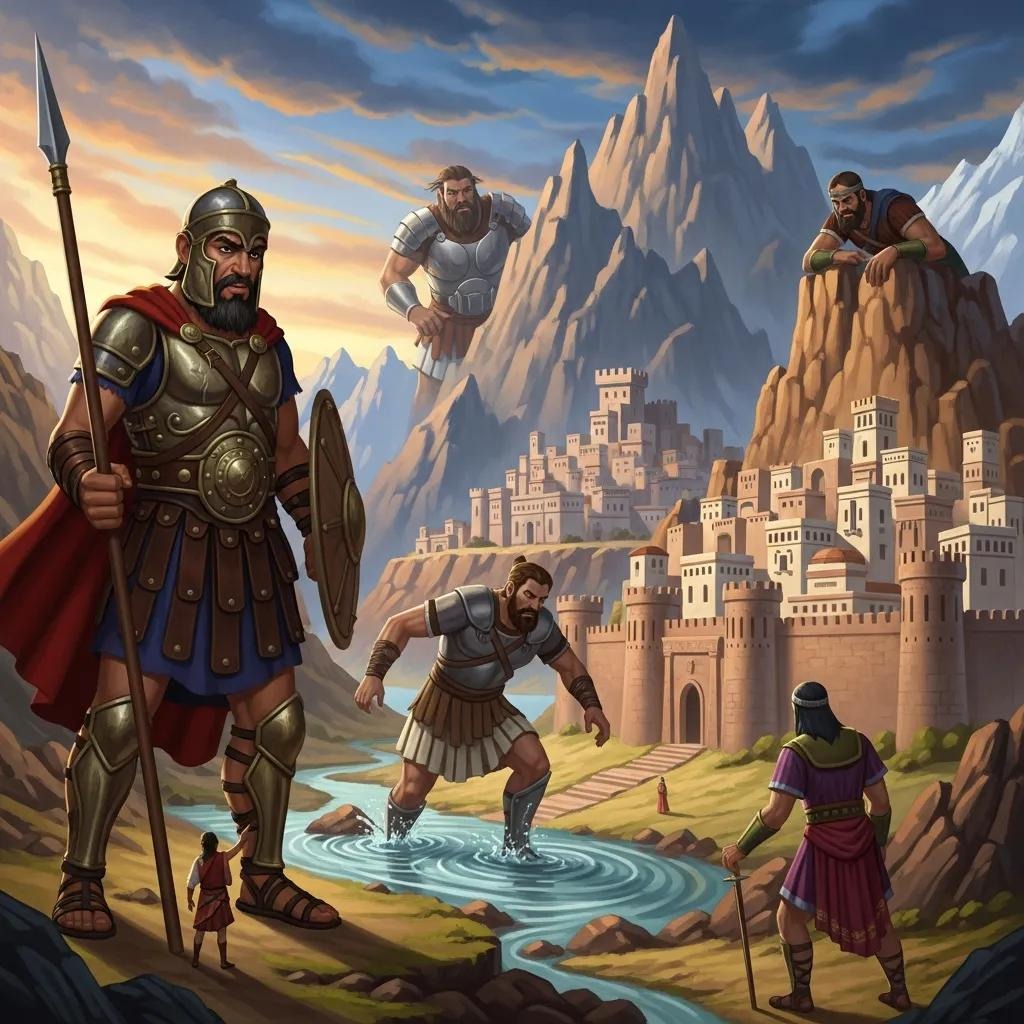
Anakim appear in Israelite tradition as a notable group of large people inhabiting parts of Canaan, mentioned by the spies in Numbers and in Joshua’s conquest narratives, which makes them central to understanding post-Flood giant references. The Anakim are associated with fortified hill cities and a reputation that evoked fear among Israel’s scouts; this reputation carried forward and colored later references to large inhabitants of Philistine areas, including Gath. Comparing Anakim, Nephilim, and Rephaim clarifies why some scholars connect Goliath to an Anakim lineage rather than to the pre-Flood Nephilim, and the table below lays out scriptural references and key characteristics to help readers see the distinctions.
The following table compares Anakim, Nephilim, and Rephaim with concise scriptural anchors and characteristic notes.
| NAME | Scriptural References | Key Characteristics |
|---|---|---|
| Anakim | Numbers 13; Joshua 11; Joshua 14 | Described as a powerful clan in southern Canaan; associated with fortified cities and a legacy of fear. |
| Nephilim | Genesis 6; Numbers 13 (possible echo) | Named in pre-Flood context; described as mighty or renowned; debated supernatural vs. human interpretations. |
| Rephaim | Deuteronomy 2; Joshua 12; 2 Samuel (places) | Sometimes treated as an ancient people or legendary ancestors; associated with specific regions and tombs of the “Rephaites.” |
This comparison clarifies that Anakim and Rephaim function as post-Flood ethnic or legendary groups associated with places, while Nephilim are primarily a pre-Flood term that later texts sometimes echo.
Where Are the Anakim Mentioned in the Bible?
Key Anakim passages include the reconnaissance report in Numbers 13, which records Israelite spies noting the Anakim in Hebron and elsewhere and concluding that they appeared like giants in comparison to Israel. Joshua’s conquests narrate cities where Anakim once dwelt and describe efforts to displace them during Israel’s settlement. These references provide geographic markers—southern Canaan, Hebron, the hill country—and establish the Anakim as part of the narrative of conquest and settlement rather than a direct continuation of Genesis’ Nephilim story. The location data and repeated references give readers a coherent thread for tracing how memories of large peoples persisted into post-Flood memory.
How Do the Anakim Compare to Other Biblical Giants Like the Rephaim?
Anakim and Rephaim overlap in that both describe large or renowned groups remembered in Israel’s traditions, yet they differ in chronological framing and geographic association. Rephaim appear in several passages tied to specific regions and are sometimes treated as ancient ancestors or legendary inhabitants whose memory endures in place-names and tomb traditions. Anakim more often function within the conquest narratives as present obstacles to Israel’s settlement. These differences suggest that “giant” terminology can denote diverse realities—ethnic groups, legendary ancestors, or rhetorical descriptions—so equating all occurrences without textual attention oversimplifies the biblical usage.
Recognizing these nuances prepares readers to assess whether Goliath is best read as Anakim, Rephaim, or something else entirely.
Who Were the Rephaim? Other Giants in Ancient Israel
The Rephaim appear as another category of large ps in biblical literature, sometimes presented as ancient peoples or as legendary ps tied to particular regions, and they contribute to the textual plurality of giant references in Israelite memory. Deuteronomy and Joshua list Rephaim in place-associated contexts, and later narratives preserve names and places that remember them, suggesting a cultural memory rather than a single biological category. Understanding Rephaim involves tracking both textual mentions and how ancient Near Eastern traditions reference ancestral giants, which helps readers avoid conflating all giant terms and instead attend to each term’s narrative and geographic markers.
What Does Scripture Say About the Rephaim?
Scriptural mentions of the Rephaim include Deuteronomy’s note that earlier peoples such as the Rephaim once lived in certain regions, and Joshua applies the term in accounts of territories Israel encountered. The Rephaim are sometimes linked to tombs or place-names that mark ancient memory of a once-renowned people. Because the usage spans legal, historical, and poetic texts, the term may operate as an ethnonym in some contexts and as a legendary p-group in others. This range of usage requires readers to read each passage in its genre and context rather than assuming a uniform identity across the canon.
How Are the Rephaim Different from the Nephilim and Anakim?
Key distinctions among Rephaim, Nephilim, and Anakim lie in chronology, context, and function: Nephilim occur in a pre-Flood context and carry cosmological implications; Anakim are tied to the conquest narratives and specific locations in Canaan; Rephaim often function as ancestral or legendary inhabitants associated with place memory. These differences indicate that “giant” language in the Bible serves multiple literary purposes—etiology, ethnography, and theological warning—so equating post-Flood giants directly with pre-Flood Nephilim typically requires additional textual support that the Bible does not always provide.
This semantic and contextual differentiation informs how we weigh claims that later ps like Goliath are Nephilim.
Were There Giants After the Flood? Biblical Evidence and Interpretations
The Bible records ps and groups described as giants after the Flood—Anakim, Rephaim, and Goliath among them—but it does not provide a single explanatory narrative for how such ps appear in post-Flood history. Scholars and traditions offer several theories to reconcile post-Flood giant references with Genesis’ pre-Flood Nephilim, ranging from genealogical survival models to idiomatic or legendary retention explanations. Evaluating these theories requires matching textual evidence to plausible interpretive mechanisms and weighing each theory’s explanatory strengths and weaknesses. The table below lays out the main theories with brief assessments to help readers compare them side-by-side.
The table below compares prevailing theories that explain giants appearing after the Flood.
| Theory | Biblical Evidence | Strengths / Weaknesses |
|---|---|---|
| Survival/Descendant Hypothesis | Post-Flood mentions of large peoples like Anakim and Rephaim | Strength: preserves continuity; Weakness: Genesis frames Nephilim pre-Flood, making direct survival unclear |
| Idiomatic/Translation Theory | Different terms used across texts; rhetorical usage | Strength: explains varied terminology; Weakness: may underplay historical memory |
| Legend/Memory Retention | Place names, tomb traditions, and genealogical notices | Strength: fits cultural memory; Weakness: requires extrapolating from sparse data |
| Manuscript/Translation Variants | Different Hebrew readings and later textual traditions | Strength: accounts for numeric/descriptor variation; Weakness: depends on textual criticism |
What Does the Bible Say About Giants Living After the Flood?
Post-Flood giant references appear in surveys of the land and later histories, including spy narratives that report Anakim, conquest accounts documenting Rephaim, and the Samuel narratives that describe large Philistine warriors such as Goliath. These later passages reflect either the survival of memories of earlier peoples or local traditions that used the language of largeness as a way to describe formidable opponents. While the biblical record preserves these occurrences, it stops short of providing a programmatic explanation, which is why interpreters turn to theory and comparative analysis to fill the narrative gap.
What Are the Theories Explaining Giants’ Presence in Ancient Israel?
Several interpretive options aim to explain post-Flood giants: one posits biological survival or descendants of pre-Flood lineages, another argues for idiomatic use of “giant” to describe formidable enemies, a third treats the accounts as legendary memory preserved in place traditions, and a fourth points to manuscript and translation variance as a source of confusion. Each theory aligns differently with the texts’ chronological signals and the genre of the passages. Comparing these options helps readers see why caution and careful exegesis are essential before equating later ps like Goliath with pre-Flood categories such as the Nephilim.
These theoretical distinctions prepare us to weigh the specific question of Goliath’s identity.
Was Goliath a Nephilim? Weighing the Biblical Evidence and Theological Significance
Short answer: the biblical text does not explicitly identify Goliath as a Nephilim, and the balance of evidence favors reading him as part of post-Flood giant traditions—more plausibly Anakim or a local giant tradition—rather than a direct Nephilim descendant. This conclusion rests on three key considerations: Genesis frames Nephilim in a pre-Flood setting, Anakim and Rephaim appear in post-Flood territory lists that match Goliath’s geography, and the Samuel narrative focuses on theological motifs rather than genealogical taxonomy. The bulleted pros and cons below present the most commonly cited arguments in compact form for quick assessment.
- Pro: Overlap in “giant” language and regional memory makes a cultural link plausible.
- Pro: Later textual echoes (e.g., Numbers 13) show that Israel remembered large inhabitants in the same areas where Goliath appears.
- Con: Genesis situates Nephilim before the Flood, making direct identity claims chronologically problematic.
- Con: The biblical narrative never labels Goliath explicitly as a Nephilim; instead it emphasizes his role as a Philistine champion.
What Arguments Support Goliath Being a Nephilim?
Supporters point to the persistence of giant traditions, overlapping language where “giant” or “renowned men” appear across texts, and the possibility that cultural memories might preserve names and categories that cross pre- and post-Flood boundaries. They highlight that Numbers 13 uses the term Nephilim in a reconnaissance context—some translations echo “Nephilim” or “sons of Anak”—and argue that this suggests a continuing memory of powerful ps that could include Goliath. Such arguments rest on textual resonance and the idea that ancient communities reused and adapted legendary categories to describe formidable opponents.
The narrative of David and Goliath has a complex textual history that scholars have analyzed to understand its development.
What Arguments Oppose the Idea That Goliath Was a Nephilim?
Opponents emphasize the clear chronological framing of Genesis 6 that places Nephilim before the Flood and note that post-Flood texts more commonly use terms like Anakim or Rephaim, which serve different narrative purposes. They stress that the Samuel narrative never uses “Nephilim” for Goliath and that equating him with pre-Flood beings requires extra-textual assumptions. Many scholars prefer the more modest claim that Goliath belongs to a post-Flood giant tradition—likely Anakim or a related group—rather than treating him as a literal Nephilim descendant, which preserves textual consistency and interpretive restraint.
Why Does This Question Matter for Faith and Biblical Understanding?
This question matters because it touches on how readers balance literal, theological, and literary readings of Scripture and how interpretive choices influence doctrine, devotional reflection, and biblical literacy. Claiming supernatural origins for a p like Goliath can lead to sensationalism or doctrinal confusion, while dismissing ancient memory risks flattening the text’s rhetorical power. Thoughtful interpretation practices—attending to context, genre, and textual evidence—support both faithful reading and spiritual formation, encouraging humility and study rather than dogmatic certainty.
After weighing evidence and significance, readers who want to continue their study or ask follow-up questions can use guided tools to explore alternate readings and receive authoritative background, which is detailed in the next section.
For readers seeking continued study, FaithTime offers accessible tools to deepen understanding and ask focused questions about giants, texts, and interpretations.
How Can FaithTime Help You Explore Biblical Giants and Goliath’s Origins?
FaithTime supports steady spiritual growth and deeper Bible study through features tailored to curious readers and young Christians who want trustworthy answers and devotional context; to see how these tools work in practice, you can explore FaithTime features for studying difficult topics like Goliath, the Nephilim, and other giants in Scripture. The app’s Ask Bible Chat provides authoritative, concise answers on doctrine and Scripture for follow-up questions about giants and textual variants. Complementary resources—Bible Study Made Simple modules, Light Devotion readings that tie theological reflection to daily life, and the Little Lamb’s Prayer Community for gentle spiritual support—help users turn study into ongoing growth. The following subsections describe practical ways to use Ask Bible Chat and where to find study materials within the app.
How to Use Ask Bible Chat for Authoritative Answers on Giants and Scripture?
Ask Bible Chat offers a simple three-step workflow to investigate questions like “Was Goliath a Nephilim?” First, open Ask Bible Chat and type a focused question or paste the verse reference you want examined. Second, review the concise explanatory answer, which will include scriptural citations, suggested interpretive options, and clarifying notes about textual variants or historical context. Third, save the response to a study list or devotional that pairs the answer with a short Light Devotion reading and suggested verses for further reflection. This process lets users move from question to study to prayerful reflection within a single, supportive environment.
Where to Find More Bible Study Resources on Giants and Ancient Israel?
FaithTime Bible Study Made Simple library contains modular lessons and short guided studies on ancient Israelite history, key Hebrew terms, and interpretive methods that illuminate passages about giants and their contexts. Light Devotion entries provide bite-sized devotional prompts connected to the textual themes—such as humility before God and reliance on grace—that appear in the David and Goliath narrative. The Little Lamb’s Prayer Community offers a gentle space to share insights and prayer requests tied to study discoveries, encouraging communal reflection rather than isolated conclusion. These layered tools help readers balance scholarly curiosity with spiritual formation.
These resources demonstrate how study and devotion can work together: Ask Bible Chat answers questions, Bible Study modules provide structured learning, and devotion/community features nurture ongoing growth.
For readers who want to continue exploring giants in Scripture, FaithTime devotional app makes it easy to ask follow-up questions, save study sessions, and turn textual insights into daily devotion and prayer prompts.
If this overview of giants, Nephilim, and ancient Israel has made you want a more structured approach to studying hard passages, you can explore FaithTime’s Bible lessons, which walk through key stories and themes with clear explanations and practical applications. To meditate on how David‑like courage and trust in God can shape your own battles, you can also read FaithTime Bible verses, using these passages for reflection and prayer.
If your questions about giants have also raised broader concerns about sin, judgment, and obedience, FaithTime’s Bible lesson on what the 12 sins can help you see how Scripture names and explains serious patterns of rebellion. For a thematic look at how different Christian traditions have summarized serious sins and their roots, you can also explore FaithTime’s article on the 10 deadly sins, which connects classic teaching on sin to key passages of Scripture.