
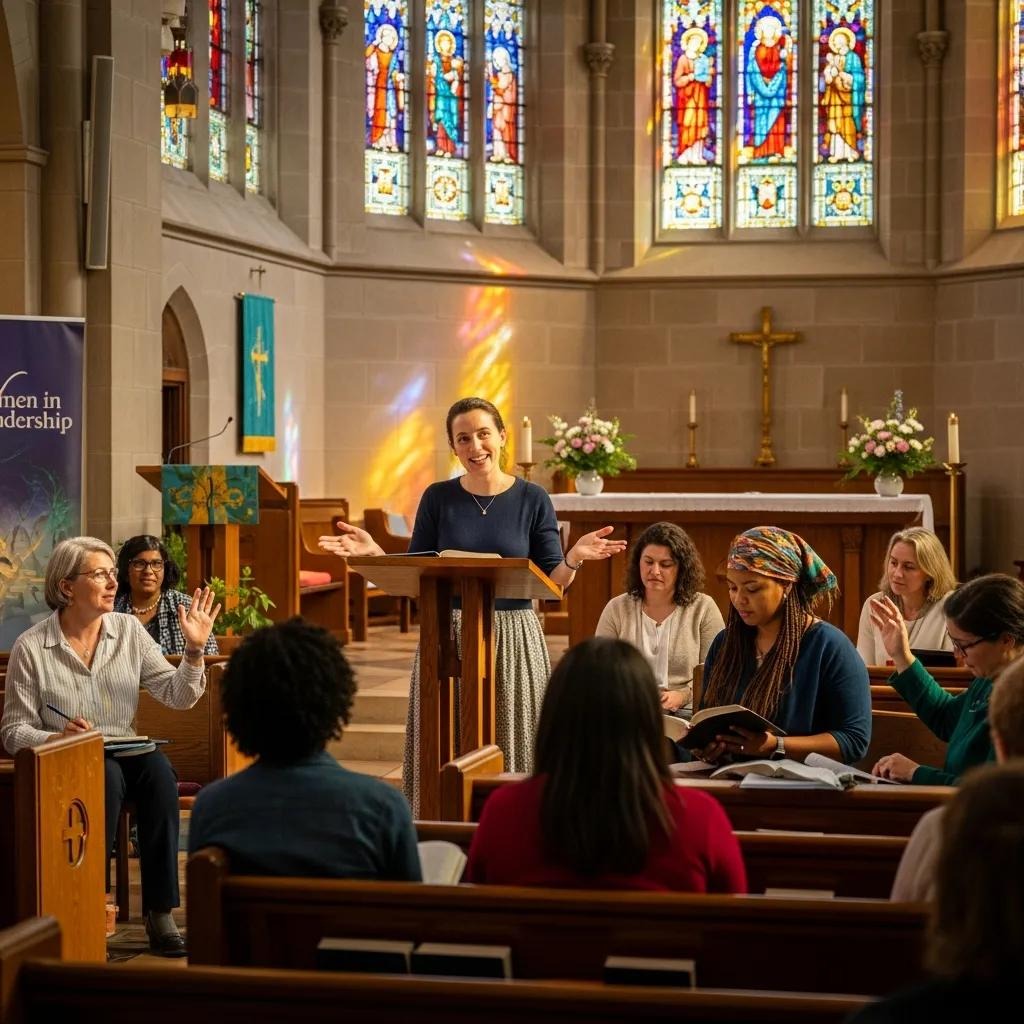
The role of women in church leadership has been a topic of significant discussion and debate within Christian communities. Understanding what the Bible says about women in church is essential for fostering inclusive practices and recognizing the contributions of female leaders throughout history. This article explores key biblical foundations, significant scriptures, and the influence of Pauline epistles on women’s roles in church leadership. Readers will learn about prominent women leaders in the Bible, the manifestation of spiritual gifts among women, and contemporary theological perspectives on women’s ministry. Additionally, we will discuss how the Faithtime app can enhance Bible study on these topics, providing tools for deeper engagement and understanding.
What Are the Biblical Foundations for Women’s Roles in Church Leadership?
The biblical foundations for women’s roles in church leadership are rooted in several key scriptures that emphasize equality and the value of women in ministry. Galatians 3:28 highlights the equality of all believers, stating that there is neither male nor female in Christ. This foundational verse supports the idea that women can hold leadership positions within the church. Furthermore, Romans 16:1 introduces Phoebe as a deaconess, showcasing an early example of a woman in a leadership role. Acts 2:17-18 affirms women’s ministry by prophesying that both sons and daughters will speak God’s words, indicating that women are called to participate actively in the church.
Which Key Scriptures Address Women’s Leadership in the Bible?
Several key scriptures address women’s leadership in the Bible, providing a framework for understanding their roles in the church. Notable verses include:
- Galatians 3:28: This verse emphasizes equality among believers, affirming that gender does not determine one’s value or role in the church.
- Romans 16:1: Phoebe is recognized as a deaconess, illustrating that women held significant positions in the early church.
- Acts 2:17-18: This passage highlights the prophetic role of women, indicating their active participation in ministry.
These scriptures collectively affirm the importance of women in church leadership and challenge traditional interpretations that limit their roles.
How Do Pauline Epistles Influence Views on Women Elders and Pastors?
The Pauline epistles significantly influence contemporary views on women elders and pastors. Paul’s teachings often emphasize equality and the value of women in ministry. For instance, in Galatians 3:28, Paul asserts that all believers are equal in Christ, which has been interpreted to support women’s leadership roles. Additionally, examples of women leaders in the early church, such as Priscilla, who taught alongside her husband Aquila, demonstrate that women were active participants in spreading the Gospel. However, some of Paul’s writings, such as those in 1 Timothy 2:11-12 and 1 Corinthians 14:34-35, have been interpreted as restrictive, leading to ongoing debates about women’s roles in church leadership.
Who Were the Prominent Women Leaders in the Bible and Early Church?

Throughout biblical history and the early church, several prominent women leaders emerged, each contributing to the spread of Christianity and the establishment of church communities. Notable figures include:
- Deborah: A judge and prophetess, Deborah led Israel during a time of crisis, demonstrating strong leadership and courage.
- Phoebe: Recognized as a deaconess in Romans 16, Phoebe played a crucial role in the early church, likely delivering Paul’s letter to the Romans.
- Priscilla: Alongside her husband Aquila, Priscilla taught Apollos, an eloquent preacher, furthering the understanding of the Gospel.
These women exemplify the diverse roles women have played in church leadership throughout history.
What Roles Did Deborah, Phoebe, and Priscilla Play in Church Leadership?
Deborah, Phoebe, and Priscilla each played unique and significant roles in church leadership.
- Deborah: As a judge, she provided guidance and leadership to the Israelites, leading them to victory in battle. Her role as a prophetess also highlights the spiritual authority women held in biblical times.
- Phoebe: Serving as a deaconess, Phoebe was likely responsible for various church functions, including caring for the needs of the congregation and possibly teaching. Her mention in Romans 16 underscores her importance in the early church.
- Priscilla: Priscilla’s partnership with Aquila in teaching Apollos illustrates the collaborative nature of ministry. She is often recognized for her theological insight and ability to instruct others in the faith.
Further emphasizing Phoebe’s significant contributions, scholarly interpretations highlight her remarkable stature and ministerial impact among early Christians.
How Did Spiritual Gifts Manifest Among Women Leaders in Scripture?

Spiritual gifts among women leaders in scripture are evident through their active participation in ministry and leadership roles. Women like Deborah, who exhibited prophetic gifts, and Priscilla, who taught and instructed others, showcase the diverse ways women utilized their spiritual gifts. The New Testament also affirms that women received spiritual gifts, such as teaching and prophecy, as indicated in Acts 2:17-18. This manifestation of spiritual gifts among women leaders highlights their integral role in the church and the importance of recognizing and nurturing these gifts within contemporary congregations.
What Are Contemporary Theological Perspectives on Women in Church Ministry?
Contemporary theological perspectives on women in church ministry emphasize equality and inclusivity. Many theologians argue that the biblical texts traditionally used to restrict women’s roles must be re-examined in light of cultural context and historical understanding. The emphasis on equality in ministry has led to increased recognition of women’s contributions and calls for inclusive practices within church leadership. This shift reflects a growing acceptance of women as pastors, elders, and leaders, challenging long-standing traditions that have limited their roles.
How Do Modern Interpretations Support or Challenge Women’s Leadership?
Modern interpretations of scripture often support women’s leadership by emphasizing the cultural context of biblical texts. Many scholars advocate for inclusive interpretations that recognize the contributions of women in ministry. For instance, the cultural restrictions present in some Pauline texts are viewed as specific to the context of the early church rather than universal mandates. This perspective encourages churches to embrace women in leadership roles, fostering a more inclusive environment that reflects the equality emphasized in Galatians 3:28.
What Do Recent Theological Studies Say About Gender and Ministry?
Recent theological studies indicate a significant shift in understanding gender roles within ministry. Research highlights the positive impact of women in leadership on church growth and community engagement. Studies also emphasize the importance of diverse leadership teams, which include women, in fostering a more holistic approach to ministry. This growing body of evidence supports the idea that gender should not be a barrier to leadership within the church, aligning with the biblical principles of equality and inclusion.
How Can the FaithTime App Enhance Bible Study on Women’s Roles in Church?
The Faithtime app offers valuable resources for enhancing Bible study on women’s roles in church. With personalized devotional plans, users can explore scripture related to women in leadership, deepening their understanding of biblical teachings. The app’s interactive features, such as Bible Al Chat, allow users to ask questions and receive personalized responses, making scripture exploration more engaging. Additionally, the community support within the app fosters discussions on women’s roles, encouraging users to share insights and experiences.
How Does the Bible Al Chat Feature Help Explore Scripture on Women Leaders?
The Bible Al Chat feature in the Faithtime app enhances the exploration of scripture related to women leaders by providing interactive and personalized responses to user inquiries. This feature allows users to delve deeper into specific passages, gaining insights into the roles and contributions of women in the Bible. By facilitating a more dynamic engagement with scripture, Bible Al Chat empowers users to understand the significance of women’s leadership in the church context.
What Community Features Support Engagement on Women in Church Topics?
The Faithtime app includes several community features that support engagement on topics related to women in church. These features encourage users to participate in discussions, share prayer requests, and engage in group challenges focused on women’s roles in ministry. By fostering a sense of community, the app helps users connect with others who share similar interests and questions, creating a supportive environment for exploring women’s contributions to the church.
What Common Questions Do People Ask About Women’s Leadership in Church?
Common questions regarding women’s leadership in church often revolve around biblical support and cultural interpretations. Key inquiries include:
- Can women be pastors according to biblical teachings? Many argue that scripture supports women’s pastoral roles, citing verses like Galatians 3:28.
- Are women allowed to teach or hold authority in church settings? This question often leads to discussions about the cultural context of certain biblical passages.
- How has church leadership historically viewed women’s roles? Understanding historical perspectives can shed light on current practices and beliefs.
These questions reflect the ongoing dialogue surrounding women’s leadership in the church and the need for continued exploration of biblical teachings.
Can Women Be Pastors According to Biblical Teachings?
In many contemporary theological interpretations, women can be pastors on the basis of biblical teachings, even though some Christian traditions still disagree with this conclusion. Galatians 3:28 emphasizes equality among believers, suggesting that gender should not restrict one’s ability to lead or teach within the church. Additionally, examples of women in leadership roles, such as Phoebe and Priscilla, demonstrate that women have historically served as leaders and teachers in the early church. This understanding encourages contemporary churches to embrace women in pastoral roles, aligning with the biblical principles of equality and inclusion.
Are Women Allowed to Teach or Hold Authority in Church Settings?
Many scholars and churches maintain that women may teach and hold authority in church settings, appealing to various biblical passages, while others interpret those same texts more restrictively. Scriptures affirming women’s teaching roles include Titus 2:3-5, which encourages older women to teach younger women. Additionally, the example of Priscilla teaching Apollos illustrates that women can hold significant authority in instructing others in the faith. While some cultural contexts may impose restrictions, the biblical foundation supports women’s active participation in teaching and leadership.
How Has Church Leadership Historically Viewed Women’s Roles and How Is It Changing?
Historically, church leadership has often viewed women’s roles as limited, with many denominations restricting their participation in leadership positions. However, this perspective is changing as more churches recognize the value of women’s contributions. The growing acceptance of women in leadership roles reflects a broader cultural shift towards inclusivity and equality. Many contemporary churches are re-evaluating their practices, embracing women as pastors, elders, and leaders, and fostering an environment that values diverse voices in ministry.
What Were Historical Church Practices Regarding Women Elders and Leaders?
Historical church practices regarding women elders and leaders varied significantly across different denominations and cultural contexts. In some periods and places of church history, women held notable ministry or leadership roles, while in many others, they experienced formal or informal restrictions on ordination and official authority. For instance, women like Phoebe and Priscilla were recognized as leaders, yet many churches later adopted practices that limited women’s participation. Understanding these historical practices is essential for recognizing the evolving role of women in church leadership today.
How Is Growing Acceptance of Women in Leadership Reflected Today?
The growing acceptance of women in leadership is reflected in the increasing number of female pastors and ministry leaders within many, though not all, Christian denominations. Many churches are actively promoting gender equality in leadership roles, recognizing the contributions of women in ministry. This shift is evident in the rise of female-led congregations and the inclusion of women in decision-making processes. As society continues to evolve, the church is also adapting, embracing a more inclusive approach to leadership that values the gifts and insights of women.
To further explore these topics, consider visiting FaithTime content for additional resources and articles.
For those interested in learning more about the organization behind this resource, you can read about FaithTime and its mission to provide accessible and engaging Bible study tools.
If you have any questions or would like to get in touch with the team, you can find contact information on the FaithTime contact page.
For a structured approach to reading the Bible, you might find value in exploring the best order to read the Bible, as suggested by FaithTime.
Additionally, Bible lessons can provide deeper insights into various biblical topics.
Frequently Asked Questions
What are the main arguments for women’s leadership in the church?
The main arguments for women’s leadership in the church center around biblical equality and historical examples. Key scriptures, such as Galatians 3:28, emphasize that all believers are equal in Christ, regardless of gender. Additionally, historical figures like Phoebe and Priscilla demonstrate that women have held significant leadership roles in the early church. Contemporary theological perspectives also advocate for inclusivity, suggesting that cultural contexts of certain biblical passages should be re-evaluated to support women’s active participation in ministry.
How can churches support women’s roles in leadership today?
Churches can support women’s roles in leadership by fostering an inclusive environment that values diverse contributions. This can be achieved through mentorship programs, leadership training, and creating opportunities for women to take on pastoral roles. Additionally, churches should engage in open discussions about gender equality in ministry, re-examining traditional interpretations of scripture that may limit women’s participation. By actively promoting women’s leadership, churches can reflect the biblical principles of equality and inclusivity.
What challenges do women face in church leadership roles?
Women in church leadership often face challenges such as cultural biases, traditional interpretations of scripture, and institutional barriers. Many denominations have historically restricted women’s roles, leading to a lack of representation in leadership positions. Additionally, women may encounter skepticism or resistance from congregants who hold traditional views on gender roles. Addressing these challenges requires ongoing dialogue, education, and a commitment to fostering an inclusive church culture that recognizes and values women’s contributions.
How do different denominations view women’s leadership in the church?
Different denominations have varying perspectives on women’s leadership in the church. Some, especially within many mainline Protestant and some evangelical groups, actively support women in pastoral and other leadership roles, while others restrict or forbid women from serving as pastors or elders. Others, particularly more conservative denominations, may impose restrictions based on traditional interpretations of scripture. This diversity reflects broader theological beliefs and cultural contexts, leading to ongoing discussions about the role of women in ministry across the Christian community.
What role do spiritual gifts play in women’s leadership?
Spiritual gifts play a crucial role in women’s leadership by affirming their capabilities and contributions to the church. Scriptures indicate that women are endowed with various spiritual gifts, such as teaching, prophecy, and leadership. Recognizing and nurturing these gifts within women not only empowers them but also enriches the church community as a whole. Encouraging women to utilize their spiritual gifts fosters a more dynamic and inclusive ministry that reflects the diverse body of Christ.
How can technology, like the FaithTime app, aid in understanding women’s roles in church?
Technology, such as the FaithTime app, can significantly aid in understanding women’s roles in church by providing accessible resources and interactive features. The app offers personalized daily scripture, Bible study tools, Bible AI Chat, and community prayer features that users can apply to study topics such as women’s contributions to ministry. By facilitating deeper engagement with biblical texts and fostering conversations around women’s leadership, the app empowers users to gain insights and support inclusive practices within their congregations.
What impact do women leaders have on church growth and community engagement?
Various studies in church and organizational settings suggest that inclusive leadership teams, including women, can positively influence growth, decision-making, and community engagement by bringing diverse perspectives and approaches to ministry. Women often excel in relational ministry, enhancing community connections and engagement. Their leadership can lead to increased participation and a more vibrant church environment, ultimately contributing to the overall health and growth of the congregation.
If you want to go deeper into the passages discussed throughout this article, exploring a broader collection of Bible lessons can help you approach complex biblical texts with greater clarity and historical context. You may also find it helpful to browse Bible verses by topic to locate specific Scriptures on calling, service, and spiritual gifts — themes that run throughout the conversation on women in church. For a closer look at how women played pivotal roles in the biblical narrative, the article on Mary Magdalene’s biblical role offers an engaging study of one of Scripture’s most prominent female figures, while Bible study for beginners provides a practical foundation for reading passages about leadership and gender with fresh eyes. As you continue studying and praying through these questions, using a faith app like FaithTime can help you stay consistent in your daily Scripture reading and reflection.