

Creating a prayer song is a profound way to express faith and connect with the divine. This guide will walk you through the essential steps of writing a prayer song, highlighting the significance of spiritual inspiration, lyrical composition, and melody crafting. Many individuals find it challenging to articulate their prayers into song, yet this process can deepen their worship experience and enhance their spiritual journey. By the end of this article, you will understand how to transform prayers and scripture into meaningful lyrics, craft melodies that resonate emotionally, and structure your song for maximum impact. We will also explore how FaithTime can support your songwriting journey.
What Are the Essential Steps to Creating a Prayer Song?
Writing a prayer song involves several fundamental steps that guide you from inspiration to completion. Understanding these steps can help you create a song that resonates with both your personal faith and the worship community.
Scholarly research provides a comprehensive framework for understanding the genre of contemporary congregational songs, offering insights into their creation and impact.
How Do You Find Spiritual Inspiration from Prayer and Scripture?
Finding spiritual inspiration is crucial for writing a prayer song. Many songwriters draw from personal experiences, prayer reflections, and scripture passages. Consider the following sources of inspiration:
- Personal Reflection: Spend time in prayer, asking for guidance and clarity on what message you wish to convey.
- Scriptural Passages: Identify verses that resonate with your current spiritual journey. These can serve as the foundation for your lyrics.
- Worship Experiences: Reflect on moments during worship services that moved you emotionally or spiritually.
By immersing yourself in these sources, you can cultivate a rich well of inspiration for your songwriting.
What Are the Key Elements of Worship Songwriting?

Understanding the key elements of worship songwriting is essential for crafting a prayer song that engages the congregation. The primary components include:
- Lyrics: The words should be heartfelt and reflective of your spiritual journey, allowing others to connect with the message.
- Melody: A memorable melody enhances the emotional impact of the song, making it easier for congregations to sing along.
- Harmony: Incorporating harmonies can add depth and richness to the song, creating a fuller worship experience.
These elements work together to create a song that not only expresses your faith but also invites others to join in worship.
Academic studies further elaborate on the measurable traits that contribute to the success of congregational songs, emphasizing the interplay between text, tune, and emotional resonance.
How Can You Turn Prayers and Scripture into Meaningful Song Lyrics?
Transforming prayers and scripture into song lyrics requires creativity and a deep understanding of the themes present in the texts. This section will guide you through the process of lyric writing.
Which Biblical Themes Enhance Your Worship Song Lyrics?
Incorporating biblical themes can significantly enhance your song’s message. Consider these common themes:
- Grace and Forgiveness: Highlighting God’s grace can resonate deeply with listeners, reminding them of His unconditional love.
- Hope and Redemption: Songs that focus on hope can uplift and encourage those facing challenges.
- Faith and Trust: Expressing themes of faith can inspire listeners to deepen their relationship with God.
By weaving these themes into your lyrics, you can create a powerful message that speaks to the heart of worship.
Further emphasizing the holistic nature of worship music, scholarly perspectives highlight the importance of balancing biblical theology with heartfelt emotional expression in congregational songs.
How Do Poetic Devices and Rhyme Improve Devotional Songwriting?
Utilizing poetic devices and rhyme can elevate your songwriting. Here are some techniques to consider:
- Imagery: Use vivid imagery to paint a picture in the listener’s mind, making the lyrics more relatable and impactful (e.g., ‘rivers of living water,’ ‘morning star’).
- Metaphors and Similes: These devices can convey complex spiritual truths in a more accessible way (e.g., ‘God is our fortress,’ ‘faith like a mustard seed’).
- Rhyme and Rhythm: A consistent rhyme scheme and rhythm can make your song more memorable and easier to sing (e.g., AABB or ABAB rhyme schemes, consistent meter).
Incorporating these elements can enhance the lyrical quality of your prayer song, making it resonate more deeply with your audience.
What Are Simple Techniques for Crafting Melodies and Harmonies in Prayer Songs?
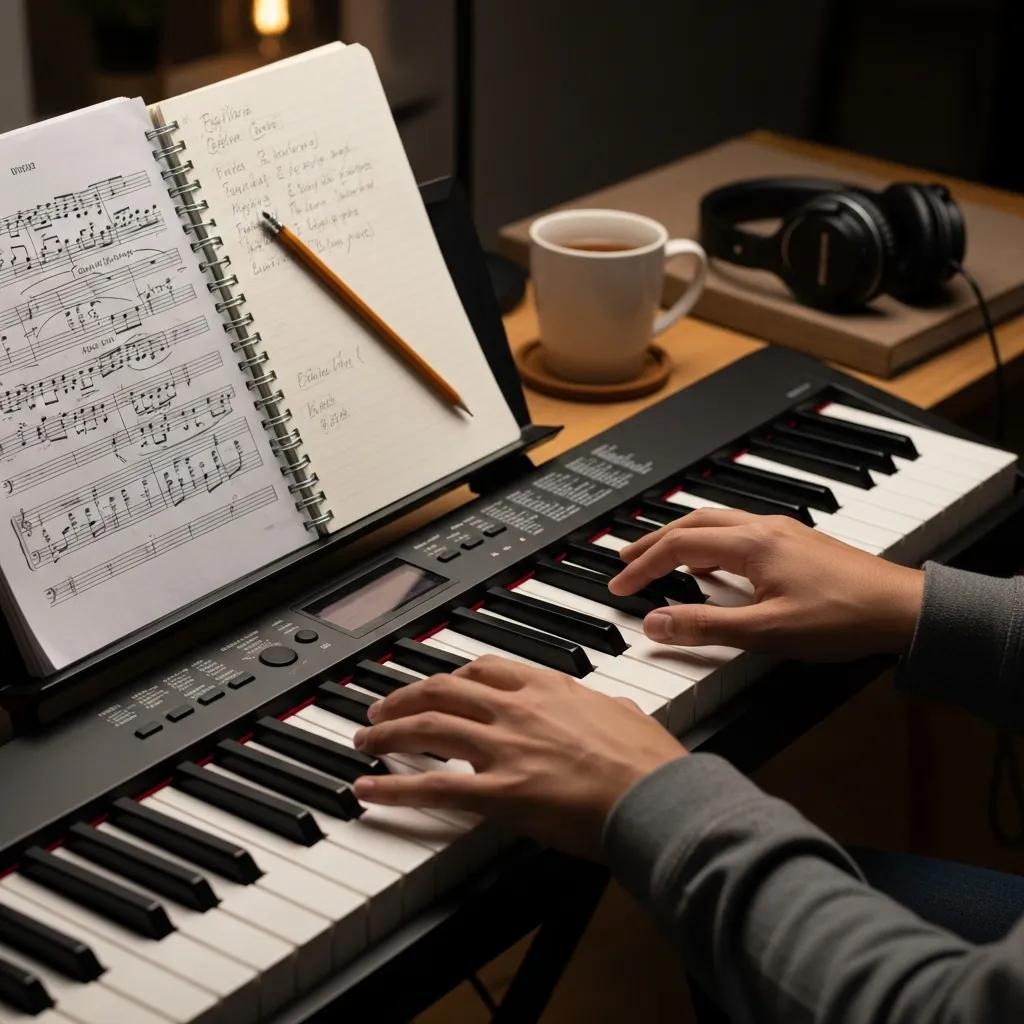
Crafting melodies and harmonies is a vital part of songwriting that can significantly affect the emotional response of your audience. Here are some techniques to help you create engaging music.
How Do You Create Accessible and Emotionally Moving Melodies?
Creating melodies that are both accessible and emotionally moving involves understanding your audience. Consider these tips:
- Keep It Simple: Aim for a melody that is easy to sing, allowing congregations to participate fully.
- Emotional Range: Use variations in pitch and dynamics to convey the emotional depth of the lyrics.
- Repetition: Repeating melodic phrases can help reinforce the song’s message and make it more memorable.
By focusing on these aspects, you can craft melodies that resonate with listeners and enhance their worship experience.
What Basic Chord Progressions Support Worship Song Harmony?
Choosing the right chord progressions is essential for supporting your song’s melody. Here are some common progressions used in worship music:
- I-IV-V: This classic progression creates a strong foundation for many worship songs (often feels foundational and resolute).
- I-V-vi-IV: Known for its emotional impact, this progression is popular in contemporary worship music (a popular, often uplifting and slightly melancholic progression).
- vi-IV-I-V: This progression offers a reflective quality, perfect for prayer songs (offers a more reflective or introspective mood).
These chord progressions can provide the harmonic support needed to elevate your song and engage your audience.
How Should You Structure Your Worship Song for Maximum Impact?
The structure of your worship song plays a crucial role in its effectiveness. A well-structured song can facilitate congregational participation and enhance the worship experience.
What Is the Role of Verse, Chorus, and Bridge in Prayer Songs?
Each section of a song serves a specific purpose:
- Verse: The verses tell the story or convey the message of the song, providing context for the chorus.
- Chorus: This is the heart of the song, summarizing its main message and inviting participation.
- Bridge: The bridge offers a contrast, often providing a new perspective or emotional peak in the song.
Understanding these roles can help you create a song that flows naturally and engages the congregation.
A common structure for worship songs often follows a pattern like: Verse 1 – Chorus – Verse 2 – Chorus – Bridge – Chorus – Outro.
How Can Song Structure Facilitate Congregational Participation?
A well-thought-out song structure can encourage participation. Consider these strategies:
- Repetitive Elements: Incorporate repeated phrases in the chorus to make it easy for the congregation to join in.
- Dynamic Changes: Use dynamics to build excitement and encourage participation during key moments.
- Clear Transitions: Ensure smooth transitions between sections to maintain the flow and keep the congregation engaged.
By focusing on these elements, you can create a song that invites active participation and enhances the worship experience.
How Can FaithTime Support Your Prayer Songwriting Journey?
FaithTime daily devotions offer valuable Scripture-centered prompts and reflection themes to assist you in your prayer songwriting journey, helping you shape lyrics that grow out of regular time with God. As you meditate on passages that shape your song themes, you can also draw from Bible lessons to deepen the theological depth behind your prayer lyrics. With features designed to enhance your creative process, you can develop your skills and connect with a supportive community.
How Does FaithTime’s Habit Tracker Encourage Consistent Songwriting?
FaithTime’s habit tracker is a powerful tool that encourages consistent songwriting. By setting daily goals, you can establish a routine that fosters creativity and discipline. This feature allows you to track your progress and stay motivated on your songwriting journey.
How Can You Use FaithTime’s Community for Feedback and Inspiration?
Engaging with FaithTime community can provide valuable feedback and inspiration. for example, articles like Online Prayer Group. Show how shared prayer and testimony can supply real-life stories and language for your worship songs. If you are exploring how technology can shape creative worship practices, you may also gain insight from Bible AI Chat , which illustrates ways digital tools can support Scripture engagement that later inspires prayer songs. You can share your songs, receive constructive criticism, and connect with other songwriters who share your passion for worship music. This collaborative environment can enhance your songwriting skills and inspire new ideas.
Should You Use AI Music Generation Tools for Prayer Songs?
The emergence of AI music generation tools offers new avenues for creativity in songwriting. While these tools can be powerful aids, it’s important to approach their use thoughtfully, especially when crafting devotional music.
Best Practices for Integrating AI in Your Songwriting Process
If you choose to explore AI music generation, consider these best practices to ensure your prayer songs remain authentic and spiritually resonant:
- As a Starting Point, Not a Replacement: Use AI to generate initial ideas for melodies, chord progressions, or lyrical prompts. Let it spark your creativity, but always infuse your personal spiritual insight and human touch.
- Maintain Authenticity: Ensure that the core message and emotional depth of your prayer song come from your heart and faith. AI can assist with structure or sound, but the spiritual essence should be uniquely yours.
- Review and Refine Critically: Treat AI-generated content as raw material. Carefully review and refine every element to align with your theological understanding and artistic vision. Edit lyrics for spiritual accuracy and emotional impact.
- Understand Ethical Considerations: Be mindful of the ethical implications of using AI, including originality and attribution. While AI can be a tool, the ultimate responsibility for the song’s message and impact rests with you.
- Focus on Worshipful Intent: Remember that the primary goal of a prayer song is to facilitate worship and connection with the divine. Use AI in ways that enhance this purpose, rather than detract from it.
By thoughtfully integrating AI tools, you can leverage technology to support your songwriting journey while preserving the profound spiritual integrity of your prayer music.
Ready to Elevate Your Prayer Songwriting?
Discover how FaithTime can empower your creative process, help you stay consistent, and connect you with a vibrant community of worship songwriters.